Learn what to eat and how to exercise on GLP-1 medications to support muscle, strength and nutrition during weight loss, with evidence-based guidance.
Quick answer: The best GLP-1 diet and exercise approach combines nutrient-dense meals, adequate protein, hydration, regular movement and progressive resistance training. Protein matters, but protein alone is not enough to preserve muscle. Strength training provides the mechanical stimulus your muscles need while aerobic activity supports heart and metabolic health.
Medical disclaimer: This article is educational and is not a substitute for individualized medical or nutrition advice. If you take a GLP-1 medication, have diabetes, kidney disease, cardiovascular disease, significant gastrointestinal symptoms or another medical condition, talk with your healthcare professional before making major dietary or exercise changes.
The First Week I Realized “Eating Less” Wasn’t the Whole Story
Melissa Carter had expected the appetite change.
What she hadn’t expected was how quickly food could become an afterthought.
At 47, the Dallas project manager was accustomed to eating lunch between meetings, grabbing something quick in the afternoon and squeezing in exercise when her schedule allowed. After starting a GLP-1 medication, she suddenly felt full after a few bites.
At first, that felt like the medication was doing exactly what it was supposed to do.
Then came the questions.
Was she eating enough protein? Did she still need to exercise if the medication was already helping her lose weight? Why did her usual workout suddenly feel harder? And if the scale was moving down, how could she make sure she wasn’t becoming simply smaller—but weaker?
Those are important questions.
The modern conversation about GLP-1 medications often gets reduced to one number: pounds lost. But the quality of that weight loss matters, too.
And there’s an important scientific distinction that is often missed.
A reduction in lean mass does not automatically mean a comparable loss of skeletal muscle.
Lean mass measured by techniques such as DXA or bioelectrical impedance includes more than muscle. It can include body water, organs, connective tissue and other non-fat tissues. Recent reviews therefore caution against treating every pound of lost lean mass as proof of clinically meaningful muscle wasting. Current evidence indicates that GLP-1-associated weight loss is predominantly fat loss, with smaller absolute reductions in lean mass and no consistent deterioration in strength or physical function.
That doesn’t mean muscle preservation can be ignored.
It means the goal should be smarter: lose excess fat while supporting muscle quality, strength, physical function and adequate nutrition.
For Melissa, that means her GLP-1 plan needs two partners: protein-rich, nutrient-dense food and progressive resistance training.
Quick Answer: What Should You Eat and How Should You Exercise on a GLP-1?
A practical GLP-1 diet emphasizes protein-rich foods, vegetables and fruit, high-fiber carbohydrates, healthy fats and adequate fluids. Because appetite may be lower, smaller nutrient-dense meals can work better than large portions. Exercise should combine regular aerobic activity with progressive resistance training. Protein supports muscle maintenance, while resistance exercise provides the stimulus that helps the body retain and build muscle function.
Why GLP-1 Weight Loss Changes the Food-and-Fitness Equation
GLP-1 receptor agonists and related incretin medications can substantially reduce appetite and food intake. That can make weight loss easier, but it can also make it harder to consume enough protein, fiber, vitamins, minerals and fluids.
A 2025 joint advisory from the American College of Lifestyle Medicine, American Society for Nutrition, Obesity Medicine Association and The Obesity Society specifically identifies adequate protein and structured strength training as important components of supportive care during GLP-1 treatment. It also notes that protein intake alone is unlikely to preserve muscle adequately without resistance training.
That’s an important distinction.
Appetite falls—but nutritional needs don’t disappear
When you’re hungry less often, eating can become something you have to plan.
You may find that a normal sandwich feels enormous. A restaurant portion can suddenly seem like two meals. You might skip breakfast because you’re not hungry, eat half of lunch and then realize at 7 p.m. that you’ve consumed very little.
That pattern can make it difficult to meet nutritional needs.
The solution isn’t to force down enormous meals.
Instead, think small, nutrient-dense and protein-forward.
Examples include:
- Greek yogurt with berries.
- Eggs with whole-grain toast.
- Cottage cheese with fruit.
- A small turkey-and-avocado wrap.
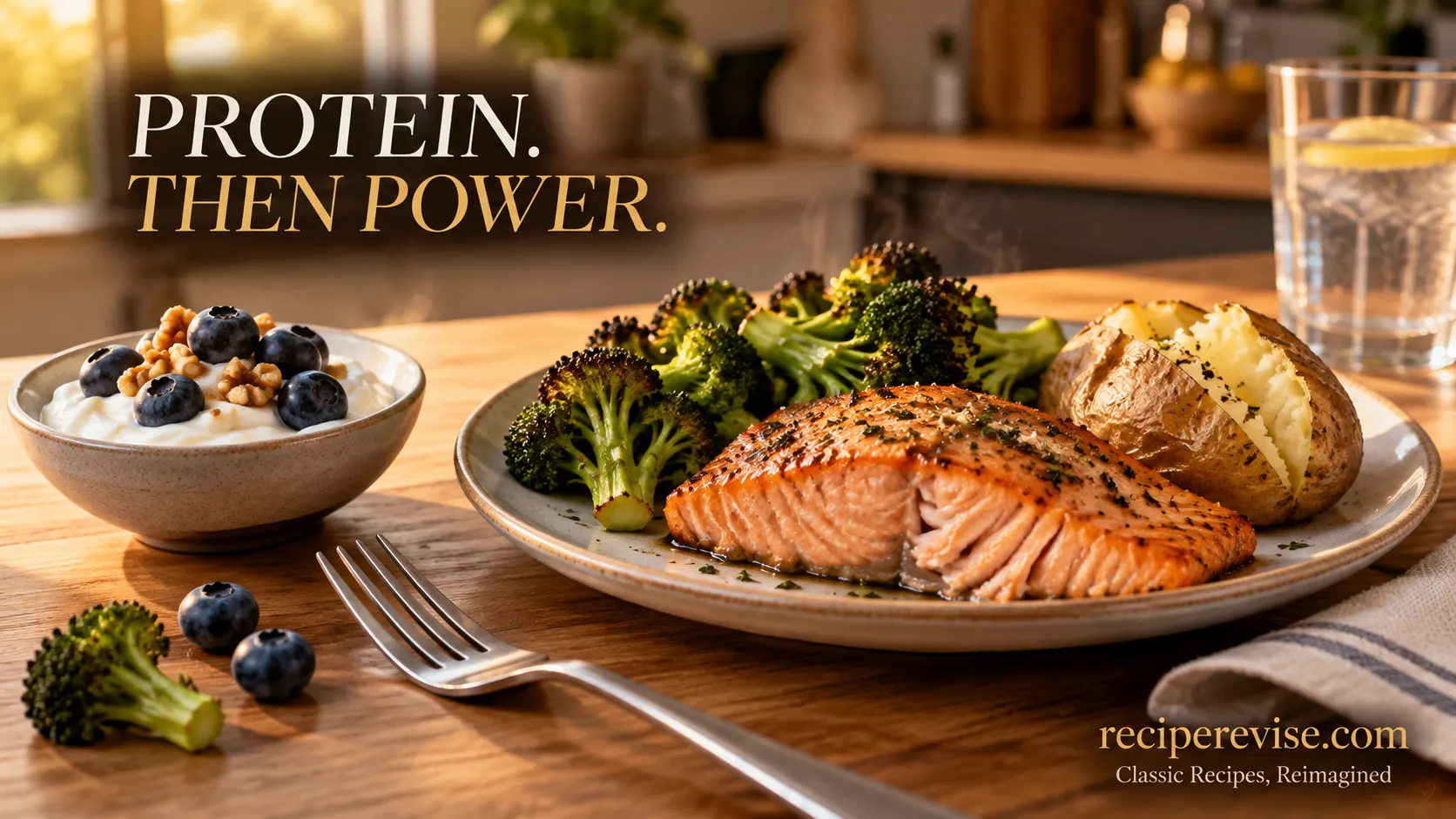
- Salmon with roasted vegetables.
- Tofu and vegetable stir-fry.
- Bean soup with a side of vegetables.
- A smoothie made with Greek yogurt or another protein-rich base.
The U.S. Department of Agriculture’s MyPlate guidance includes seafood, meat, poultry, eggs, beans, peas, lentils, nuts, seeds and soy foods among the major protein-food choices.
Managing diabetes and high blood pressure doesn’t have to mean giving up good food—discover RecipeRevise’s practical 7-day meal and exercise plan designed to make healthier choices feel simpler and more sustainable.
“Lean mass” isn’t synonymous with muscle
This is where the internet can make the issue sound scarier than the evidence supports.
If a study reports that participants lost lean mass during weight reduction, that doesn’t tell you that the same amount of skeletal muscle disappeared.
DXA-measured lean mass and other estimates of fat-free mass contain components beyond skeletal muscle. Recent research emphasizes that muscle quantity, muscle quality, strength and physical performance should ideally be assessed separately.
One 2026 systematic review and meta-analysis of randomized trials found that lean mass accounted for roughly 25% to 39% of total weight lost with incretin therapy, depending on the medication. Importantly, lifestyle interventions had a broadly similar proportion, while interventions incorporating resistance training showed a more favorable body-composition profile.
So the headline isn’t “GLP-1 drugs destroy muscle.”
The better takeaway is:
Significant weight loss can reduce lean tissue, and people using GLP-1 medications should actively support muscle health rather than assuming the scale tells the whole story.
Why resistance training belongs beside the medication
Protein supplies the raw materials.
Resistance training supplies the reason for your body to keep using those materials to support muscle.
That is why “just eat more protein” is incomplete advice.
The 2025 joint advisory notes that increased protein intake alone is unlikely to preserve muscle adequately without structured resistance training. It recommends combining nutritional strategies with strength training and aerobic activity.
The American College of Sports Medicine’s 2026 resistance-training position stand also synthesized evidence from more than 137 studies and 30,000 participants to update practical resistance-training recommendations for muscle function, strength, hypertrophy and physical performance.
You don’t need to become a bodybuilder.
You need to give your muscles a reason to stay strong.
The GLP-1 Plate: What to Prioritize When Your Appetite Is Small
When portions shrink, food quality becomes more important.
A useful mental model is:
Protein first → produce next → high-quality carbohydrate as tolerated → healthy fat in a sensible amount.
This isn’t a rigid diet. It’s a way to prioritize nutrition when you have limited appetite.
Protein first
There isn’t one universal protein prescription that is right for every person taking a GLP-1.
Protein needs can vary according to body size, age, physical activity, kidney function, dietary pattern and the amount of weight being lost. Recent expert guidance has proposed higher protein intakes during active weight reduction, but also notes uncertainty about whether calculations should use actual body weight, adjusted weight or fat-free mass in people with obesity.
For Melissa, a practical approach is to make a protein-rich food part of every meal rather than trying to consume a huge amount at dinner.
Good options include:
- Eggs.
- Greek yogurt.
- Cottage cheese.
- Fish and seafood.
- Chicken or turkey.
- Tofu and tempeh.
- Beans and lentils.
- Milk or fortified soy milk.
- Nuts and seeds.
Fiber-rich carbohydrates
Carbohydrates don’t need to disappear from a GLP-1 diet.
Vegetables, fruit, beans, lentils and whole grains provide carbohydrates alongside fiber and other nutrients.
Examples include:
- Oatmeal.
- Brown rice.
- Quinoa.
- Whole-grain bread.
- Sweet potatoes.
- Beans.
- Lentils.
- Berries.
- Apples.
- Broccoli.
- Leafy greens.
The USDA recommends a variety of vegetables, including dark-green, red-and-orange, starchy and other vegetable groups.
Healthy fats—but don’t let them crowd out protein
Avocado, olive oil, nuts, seeds and fatty fish can fit comfortably into a balanced eating pattern.
But remember the appetite problem.
A tablespoon of oil is easy to consume. A plate full of vegetables and protein takes considerably more room.
When appetite is limited, prioritize foods that provide substantial nutritional value for the amount you can comfortably eat.
Hydration
Don’t wait until you’re extremely thirsty to think about fluids.
Nausea, vomiting or diarrhea can make dehydration more likely, and FDA prescribing information for semaglutide specifically warns about volume depletion and kidney injury associated with gastrointestinal adverse effects.
Water should be your everyday foundation. Depending on your medical situation, milk, fortified soy beverages, soups and other fluids can also contribute.
If your clinician has given you a fluid restriction, follow that individualized plan instead.
A Seven-Day U.S.-Grocery-Store Food Framework
This is an educational example, not a personalized calorie prescription.
The portions can be adjusted according to appetite, nutritional needs, activity level and advice from your healthcare professional.
Table 1: 7-Day GLP-1 Meal Plan
| Day | Breakfast | Lunch | Dinner | Snack |
|---|---|---|---|---|
| 1 | Greek yogurt, berries and 1 tbsp chopped walnuts | Turkey, avocado and vegetable whole-grain wrap | Salmon, roasted broccoli and small baked potato | Apple + 1 tbsp peanut butter |
| 2 | 2 eggs, whole-grain toast and berries | Lentil soup + side salad with olive oil vinaigrette | Chicken breast, brown rice and green beans | Cottage cheese + pineapple |
| 3 | Oatmeal made with milk, Greek yogurt and blueberries | Tuna salad over mixed greens + whole-grain crackers | Tofu and vegetable stir-fry with quinoa | Greek yogurt |
| 4 | Cottage cheese, strawberries and whole-grain toast | Chicken-and-bean grain bowl with vegetables | Turkey meatballs, marinara, whole-grain pasta and spinach | Small handful of almonds + fruit |
| 5 | Vegetable omelet + whole-grain toast | Salmon salad with chickpeas and vegetables | Chicken fajita bowl with peppers, onions, black beans and avocado | Greek yogurt + berries |
| 6 | Greek yogurt smoothie with berries, spinach and milk | Turkey and vegetable soup + whole-grain toast | Shrimp, roasted vegetables and quinoa | Apple + peanut butter |
| 7 | Eggs, avocado toast and fruit | Bean-and-chicken salad bowl | Baked chicken, sweet potato and mixed vegetables | Cottage cheese + berries |
Why this works
Day 1: Protein appears repeatedly without requiring enormous meals.
Day 2: Beans, lentils and vegetables add fiber and variety while eggs and chicken provide compact protein sources.
Day 3: The plan uses several smaller protein opportunities instead of relying on one large dinner.
Day 4: Familiar American foods make the plan easier to sustain than an overly restrictive “diet menu.”
Day 5: The bowl format allows portion flexibility. If appetite is low, eat the protein and vegetables first and save the remainder.
Day 6: A smoothie provides an option for days when chewing a large meal feels unappealing.
Day 7: The plan ends with ordinary foods Melissa could realistically continue eating beyond one week.
What to Eat When You Have Almost No Appetite
Some days will be easier than others.
Instead of thinking, “I have to finish lunch,” use a smaller target:
What is the most nutritious amount I can comfortably eat right now?
A useful backup list:
- Greek yogurt.
- Cottage cheese.
- Eggs.
- Soft tofu.
- Fish.
- Bean soup.
- Chicken soup.
- Protein-rich smoothie.
- Fortified milk or soy beverage.
- Nut butter on whole-grain toast.
The 2025 GLP-1 nutrition advisory specifically discusses smaller, more frequent meals and nutrient-dense smoothies or protein drinks for people whose appetite or food interest is low.
Supplements are different.
A protein shake can be a convenient food supplement when ordinary meals aren’t enough. It isn’t automatically necessary simply because you’re taking a GLP-1 medication.
If you’re routinely unable to eat enough, losing weight extremely quickly, experiencing persistent gastrointestinal symptoms or becoming unusually weak or fatigued, talk with your healthcare team or a registered dietitian.
The Workout Question: Do You Actually Need Strength Training?
Yes, if your goal includes preserving strength and physical function while losing weight.
That doesn’t mean you need a gym membership.
Resistance training can include:
- Dumbbells.
- Resistance bands.
- Weight machines.
- Body-weight exercises.
- Squats to a chair.
- Wall push-ups.
- Step-ups.
- Loaded carries.
Aerobic exercise still matters. Walking, cycling, swimming and other cardiovascular activities support cardiorespiratory fitness and metabolic health.
But if muscle preservation is part of the goal, resistance exercise deserves its own place in the week.
Current expert guidance for GLP-1 therapy supports combining resistance training with aerobic activity rather than relying on cardio alone.
A Beginner 3-Day GLP-1 Strength Routine
This is an educational example, not an individualized exercise prescription.
Start conservatively, especially if you are new to resistance training.
Day 1 — Squat, push, pull, carry
Warm-up: 5–10 minutes of easy walking and gentle mobility.
Workout:
- Chair squat — 2 sets of 8–12.
- Wall or incline push-up — 2 sets of 8–12.
- Resistance-band row — 2 sets of 8–12.
- Farmer carry — 2 rounds of 20–30 seconds.
- Optional calf raises — 2 sets of 10–15.
Finish with an easy 5–10-minute walk if you feel comfortable.
Day 2 — Hinge, push, pull, core
- Hip hinge with light dumbbells — 2 sets of 8–12.
- Dumbbell chest press or incline push-up — 2 sets of 8–12.
- Seated or band row — 2 sets of 8–12.
- Glute bridge — 2 sets of 10–15.
- Bird dog — 2 sets per side.
Rest at least a day between strength sessions when you’re beginning.
Day 3 — Full-body repeat
- Goblet squat or chair squat — 2 sets of 8–12.
- Dumbbell shoulder press — 2 sets of 8–12.
- Band or cable row — 2 sets of 8–12.
- Romanian deadlift with light weights — 2 sets of 8–12.
- Suitcase carry — 2 rounds per side.
How to progress
Don’t chase exhaustion.
When you can perform the prescribed repetitions with good technique and the exercise feels manageable, gradually increase resistance, repetitions or difficulty.
That is progressive resistance training.
Your muscles don’t need you to destroy them.
They need a reason to adapt.
The 2026 ACSM position stand emphasizes resistance-training programming for muscle function, strength and physical performance, based on a large body of evidence.
A Seven-Day Exercise Plan
Table 2: Beginner 7-Day GLP-1 Exercise Framework
| Day | Activity | Duration | Intensity | Notes |
|---|---|---|---|---|
| 1 | Full-body resistance + walking | 30–45 min | Moderate | Start with 2 sets per exercise |
| 2 | Brisk walking | 25–35 min | Moderate | You should be able to speak in short sentences |
| 3 | Full-body resistance | 30–45 min | Moderate | Focus on technique |
| 4 | Easy walk + mobility | 20–30 min | Easy | Recovery day |
| 5 | Full-body resistance + short walk | 30–45 min | Moderate | Progress only if recovery is good |
| 6 | Walking, cycling or swimming | 30–45 min | Moderate | Choose an activity you enjoy |
| 7 | Rest or gentle movement | 10–20 min | Easy | Recovery matters |
Longer-term, expert guidance commonly targets at least 150 minutes of moderate aerobic activity per week alongside regular strength training, but you don’t have to reach that number immediately. Build toward it according to your current fitness and medical situation.
What If You’re Too Nauseated or Tired to Train?
Don’t force a hard workout through significant symptoms.
GI side effects such as nausea, vomiting and diarrhea are common concerns with GLP-1 therapies. FDA labeling for semaglutide and tirzepatide warns that severe or persistent gastrointestinal symptoms can contribute to dehydration and kidney problems.
On a rough day, your workout might become:
- A 10-minute walk.
- Gentle mobility.
- A few easy body-weight exercises.
- Or complete rest.
Consistency over months matters more than winning one workout.
If you have persistent vomiting or diarrhea, cannot maintain hydration, experience severe abdominal pain, fainting, significant dizziness or other concerning symptoms, contact your healthcare professional promptly.
Looking for a practical way to eat better while supporting liver health? RecipeRevise’s 7-day fatty liver meal plan brings together approachable American meals and an easy-to-follow exercise routine.
The “I Can’t Eat Enough” Problem
This is where a GLP-1 meal plan has to be different from a traditional weight-loss diet.
Traditional dieting often focuses on reducing calories.
With appetite-suppressing medication, the challenge can become getting enough nutrition into a smaller appetite.
Try three adjustments.
1. Make meals smaller
Instead of a large breakfast, consider:
- One or two eggs.
- A slice of whole-grain toast.
- Fruit.
If that’s still too much, eat part now and finish later.
2. Make every bite count
Choose foods that provide protein and other nutrients rather than filling your limited appetite with foods that offer little nutritional value.
For example, Greek yogurt with berries generally provides more nutritional value than a handful of crackers alone.
3. Use liquid nutrition strategically
A smoothie can be useful when solid food is difficult.
One practical version:
- ¾–1 cup milk or fortified soy milk.
- ½–1 cup Greek yogurt.
- ½ cup berries.
- Handful of spinach.
- 1 tbsp peanut butter.
Blend until smooth.
This isn’t a prescription. It’s simply one example of how to make a small-volume meal more nutritionally substantial.
What the Research Actually Says About Muscle Loss
Here’s where the evidence deserves nuance.
Some earlier GLP-1 discussions treated the percentage of weight lost as lean mass almost as if it represented muscle loss directly.
That interpretation is too simplistic.
A 2024 systematic review and network meta-analysis of 22 randomized controlled trials found that GLP-1 receptor agonists reduced fat mass and lean mass, with lean mass accounting for approximately one-quarter of total weight loss.
A newer 2026 meta-analysis of randomized trials similarly found that lean mass represented roughly 25% to 39% of weight lost with incretin therapies, depending on the medication. It also found that adding resistance training was associated with a more favorable lean-mass profile.
But another critical piece is what those measurements mean.
Lean mass isn’t synonymous with skeletal muscle.
And losing some lean mass during substantial weight loss isn’t automatically equivalent to developing sarcopenia.
A 2025 review of muscle health in the incretin era concluded that GLP-1-associated weight loss is largely fat mass, with modest absolute lean-body-mass decline and no consistent deterioration in strength or physical function across the available evidence.
At the same time, a newer 2026 systematic review cautions that the available evidence remains heterogeneous and that current research isn’t strong enough to completely rule out clinically meaningful muscle loss in susceptible individuals.
That’s the balanced conclusion.
Don’t panic about every pound of lean mass reported on a body-composition scan. But don’t ignore strength, physical function, protein intake or resistance exercise either.
Protein Alone Isn’t the Muscle-Preservation Plan
This point deserves repeating.
Protein is important.
Protein alone isn’t enough.
A 2025 expert advisory specifically states that increased protein intake alone is likely inadequate to preserve muscle without structured resistance training.
Think about it this way:
Protein = building material.
Resistance training = the signal.
Adequate overall nutrition = the environment.
You want all three working together.
For someone like Melissa, that could mean eating a protein-rich breakfast, including protein at lunch and dinner, and performing full-body resistance training three times per week.
That is much more useful than obsessing over whether a particular protein bar contains 20 or 25 grams.
What Happens If You Stop the Medication?
This isn’t a reason to stop treatment.
It is a reason to understand that obesity is a chronic condition and that weight management often requires long-term planning.
Recent systematic reviews consistently find substantial weight regain after GLP-1 receptor agonists are discontinued. A 2026 systematic review and nonlinear meta-regression found that about 60% of lost weight was regained one year after discontinuation in the randomized trials included in its primary analysis.
Another 2026 systematic review of weight-management medications found rapid weight regain after medication cessation, with cardiometabolic benefits tending to reverse as weight returned.
That makes the lifestyle component important whether medication continues or eventually changes.
Strength training, nutritious eating, adequate protein, regular activity and sustainable routines aren’t merely “things to do after the diet.”
They’re part of the long-term health strategy.
Never change or discontinue a prescribed GLP-1 medication without discussing it with your healthcare professional.
The Bigger Goal Isn’t a Smaller Number on the Scale
Imagine Melissa reaches her goal weight.
What does success look like?
It could mean:
- Carrying groceries without struggling.
- Walking up stairs without stopping.
- Getting up from a chair easily.
- Having better stamina during a busy workday.
- Improving blood glucose.
- Improving blood pressure.
- Reducing excess body fat.
- Feeling stronger.
The scale is useful information.
It simply isn’t the whole story.
A better question is:
“Am I becoming healthier and more capable as my weight changes?”
That’s the goal of a muscle-smart GLP-1 plan.
GLP-1 Food + Fitness Checklist
Print this list or save it to your phone.
- Include a protein-rich food at each meal.
- Eat vegetables and fruit regularly.
- Include fiber-rich carbohydrate foods rather than automatically avoiding carbohydrates.
- Drink fluids consistently.
- Keep easy, nutrient-dense backup foods available.
- Perform resistance training regularly.
- Include aerobic activity such as walking, cycling or swimming.
- Progress resistance gradually rather than exercising to exhaustion.
- Pay attention to strength and physical function—not just scale weight.
- Tell your healthcare team about persistent GI symptoms, inadequate intake or unusual weakness.
When to Talk With Your Healthcare Team
Contact your healthcare professional if you’re struggling to eat or drink enough, losing weight unexpectedly rapidly, developing persistent weakness or experiencing significant gastrointestinal symptoms.
FDA labeling for semaglutide warns about dehydration-related kidney injury and severe gastrointestinal reactions. It also identifies important medication-specific concerns including gallbladder disease, pancreatitis and hypoglycemia in certain patients, particularly when combined with other glucose-lowering medications.
Seek prompt medical attention for symptoms such as:
- Severe or persistent abdominal pain.
- Persistent vomiting.
- Inability to maintain fluids.
- Fainting or significant dizziness.
- Symptoms of severe hypoglycemia if you’re at risk.
- Yellowing of the skin or eyes.
- Severe or persistent gastrointestinal symptoms.
Exercise also deserves individualized medical guidance if you have significant cardiovascular disease, uncontrolled blood pressure, major joint limitations, diabetes-related complications or another condition that could affect exercise safety.
FAQ
Can I take a GLP-1 without exercising?
Yes, medication can produce weight loss without an exercise program. However, exercise adds benefits that medication alone cannot provide, particularly improvements in strength, physical function and cardiovascular fitness. If preserving muscle and staying physically capable are priorities, resistance training should be considered an important part of the overall plan.
How much protein should I eat on a GLP-1?
There is no single protein target that fits everyone taking a GLP-1. Requirements depend on factors such as body size, age, activity, kidney function and the amount of weight being lost. Expert guidance has proposed higher protein intakes during active weight reduction, but individualized calculation may be appropriate, particularly for people with obesity or kidney disease.
Is cardio or strength training better on a GLP-1?
They serve different purposes, so you don’t have to choose one. Aerobic activity supports cardiorespiratory and metabolic health, while resistance training provides a direct stimulus for maintaining strength and muscle function. A combined program is generally more useful than treating cardio and strength training as competitors.
Can GLP-1 medications cause muscle loss?
GLP-1-associated weight loss can include reductions in lean mass, but lean mass is not the same thing as skeletal muscle. Recent evidence indicates that most weight loss is fat mass, while lean-mass reductions are smaller in absolute terms. Current research does not consistently show deterioration in strength or physical function, although people at higher risk may require closer monitoring.
What should I eat if I have no appetite?
Choose small portions of nutrient-dense foods that provide protein and other essential nutrients. Greek yogurt, eggs, cottage cheese, fish, tofu, beans, soups and protein-rich smoothies can be easier to manage than large meals. If poor appetite prevents adequate food or fluid intake, discuss it with your healthcare team rather than simply accepting it as normal.
Do I need protein supplements on a GLP-1?
Not necessarily. Food should generally be the foundation, but a protein shake or nutritionally complete drink can be useful when appetite makes adequate intake difficult. Supplements should fill a nutritional gap rather than automatically become part of everyone’s GLP-1 routine. People with kidney disease or other medical conditions should ask their clinician before substantially increasing protein intake.
What is the best workout plan for someone new to GLP-1 medication?
Start with manageable resistance training two or three times per week, combined with regular walking or another enjoyable aerobic activity. Begin with simple full-body movements and progress gradually. The goal is consistency and improved function—not exhausting workouts. Exercise should be adapted to your current fitness level and medical conditions.
Key Takeaways
The smartest GLP-1 plan isn’t simply about eating less.
It is about making the food you do eat count and giving your body a reason to remain strong.
- GLP-1 weight loss is predominantly fat loss, although some lean mass typically decreases.
- Lean mass is not the same as skeletal muscle, so body-composition numbers should not automatically be interpreted as muscle wasting.
- Current evidence does not consistently demonstrate deterioration in strength or physical function during GLP-1 treatment.
- Adequate protein matters, particularly when appetite is reduced.
- Protein alone isn’t enough; progressive resistance training provides an important stimulus for maintaining muscle function.
- Aerobic exercise remains valuable for cardiovascular and metabolic health.
- Smaller, nutrient-dense meals can be easier to manage when appetite is suppressed.
- Persistent nausea, vomiting, diarrhea, dehydration or inadequate food intake deserves medical attention.
- The most useful measure of success is not just pounds lost, but better health, strength, stamina and daily function.
For Melissa, the winning formula isn’t complicated:
Eat enough of the right foods. Train your muscles. Move your body. Pay attention to how you function—not just what the scale says.
That is how a GLP-1 medication can become part of a broader health strategy rather than the entire strategy.
Editorial Evidence Note
Reviewed against current 2025–2026 evidence and guidance from the American College of Sports Medicine, American Society for Nutrition, Obesity Medicine Association, The Obesity Society, USDA MyPlate and FDA prescribing information. The body-composition discussion was additionally checked against recent systematic reviews and meta-analyses of randomized trials. No individual medical reviewer is claimed.
Important evidence caveat: Direct randomized evidence testing a complete “GLP-1 + specific protein target + progressive resistance program” package remains more limited than the broader evidence supporting resistance training and adequate protein during weight reduction. The recommendation is therefore best described as evidence-informed and clinically plausible, rather than a universally proven GLP-1-specific protocol.
Sources
- American College of Lifestyle Medicine, American Society for Nutrition, Obesity Medicine Association & The Obesity Society — Joint GLP-1 Nutrition Advisory (2025).
- American College of Sports Medicine — 2026 Position Stand on Resistance Training.
- Muscle Health in the Modern Era of Incretin-Based Therapies (2025). European Journal of Clinical Investigation.
- Lean Mass and Musculoskeletal Preservation in GLP-1-Based Obesity Treatment (2026).
- Lean Mass Changes With Incretin Therapy Versus Lifestyle Intervention: Systematic Review and Meta-Analysis (2026).
- Body Composition Remodelling During GLP-1-Based Therapy: Systematic Review and Meta-Analysis (2026).
- FDA WEGOVY Prescribing Information (2026).
- FDA ZEPBOUND Prescribing Information (2026).
- USDA MyPlate — Protein Foods and Vegetable Groups.
- Weight Regain After GLP-1RA Discontinuation — 2026 Systematic Review and Meta-Regression.