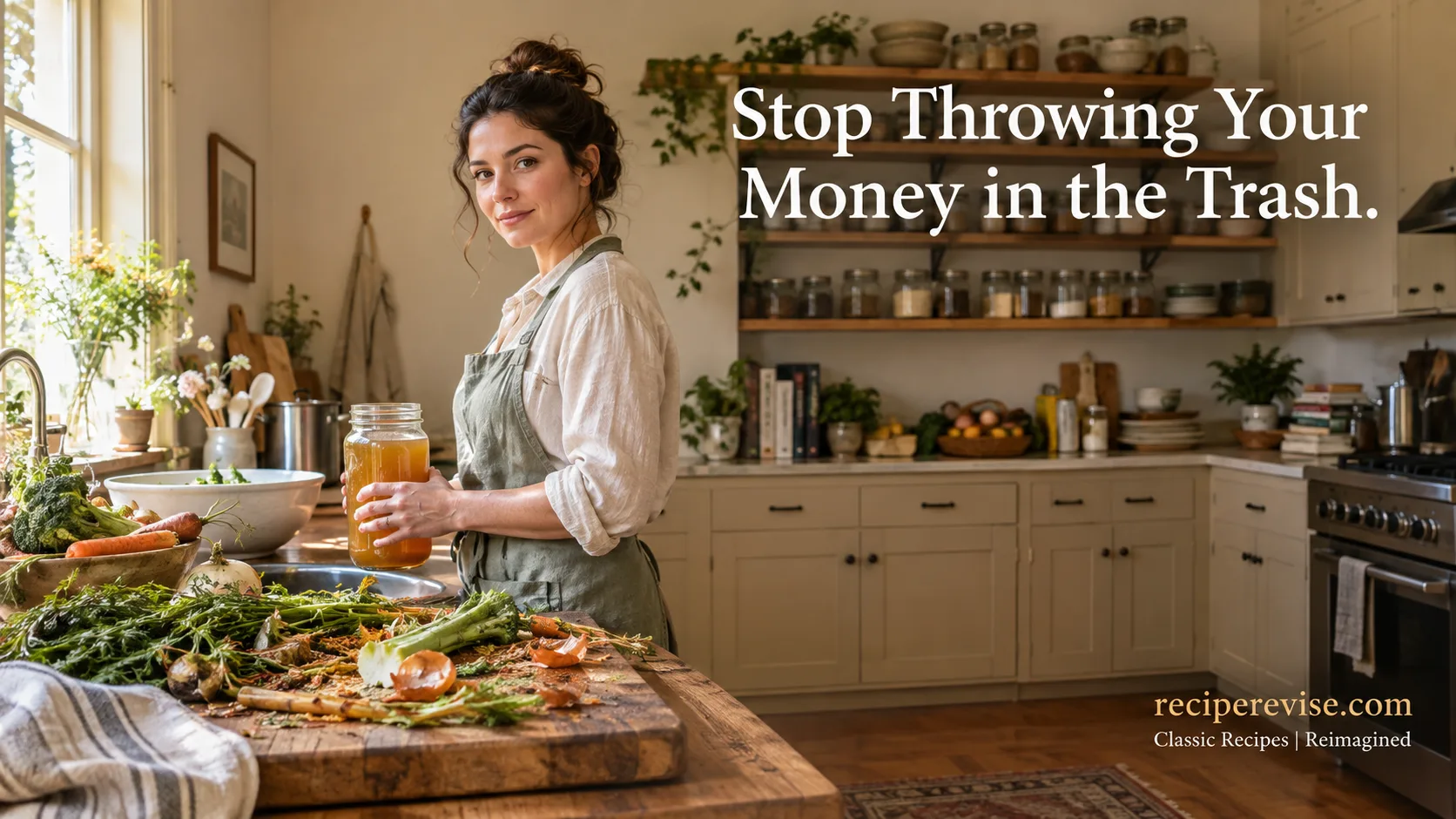
Master root-to-stem meal prep to transform kitchen scraps into high-protein, budget-friendly meals. Save money and reduce household food waste starting today.
The Ultimate Root-to-Stem Meal Prep Guide: Turn Kitchen Scraps into High-Protein, Budget-Friendly Meals
Opening the crisper drawer on a Thursday evening to find a bag of liquefied spinach is a universal kitchen experience. Along with the mild disgust comes a quieter, more persistent feeling: the mental math of watching your grocery budget literally decompose.
For many households, the push to eat healthier, high-protein meals clashes with the reality of busy schedules and rising grocery costs. The result is a cycle of overbuying, underutilizing, and ultimately throwing away.
Enter root-to-stem meal prep.
Unlike rigid, perfectionist “zero-waste” mandates that demand hours of obscure culinary labor, root-to-stem meal prep is a practical kitchen strategy. It focuses on utilizing the entire edible portion of your ingredients to build modular, high-protein meals for the week. It is not about eating garbage; it is about culinary resourcefulness. By shifting how you view vegetable trimmings, meat bones, and day-old staples, you can plug a major leak in your household budget while simultaneously hitting your nutritional targets.
The Real Cost of the Crisper Drawer
To understand the value of this system, it helps to look at the baseline data. According to the United States Department of Agriculture (USDA), an estimated 30 to 40 percent of the United States food supply is wasted.
The financial impact of this inefficiency is staggering. The Environmental Protection Agency (EPA) estimates that the average cost of food waste to a single consumer is $728 annually. For a household of four, that number climbs to approximately $2,913 per year, representing roughly 11 percent of total household food spending.
Root-to-stem cooking directly attacks this statistic. It is a methodology that treats vegetable peels, herb stems, and meat bones not as refuse, but as foundational ingredients. When applied to a structured meal prep routine, this approach reduces grocery frequency, minimizes landfill contributions, and maximizes the nutritional yield of every dollar spent.
The Protein-Powered Scrap Strategy
A common weakness in mainstream zero-waste cooking guides is an over-reliance on plant-based scraps, which can leave active individuals and families struggling to meet their daily protein and satiety requirements. A truly effective meal prep system must account for macronutrients.
Here is how to extract high-quality protein and functional utility from commonly discarded items:
- Poultry and Beef Bones: A roasted chicken carcass or beef marrow bones are not trash; they are free collagen and mineral-rich broth. Simmering these scraps yields a high-protein liquid base for soups, grain bowls, and sauces that store-bought broths cannot match in depth or nutritional profile.
- Greek Yogurt Whey: When straining regular yogurt to make Greek yogurt, the leftover liquid is whey protein. Rather than pouring it down the drain, use it as a liquid substitute in pancake batter, oatmeal, or post-workout smoothies to add a subtle protein boost without altering the flavor profile.
- Aquafaba (Chickpea Liquid): The viscous liquid from a can of chickpeas is a powerful emulsifier and binder. It can replace eggs in certain baking applications or be whipped into a vegan alternative to mayonnaise, adding functional utility to a pantry staple often rinsed away.
- Stale Whole-Grain Bread: Bread that has lost its freshness is ideal for transformation. Pulsed into coarse crumbs and toasted with olive oil and herbs, it becomes a high-fiber, protein-dense topping for casseroles or a crunchy coating for baked chicken, outperforming highly processed, store-bought breadcrumbs.
The Scrap Transformation Matrix: A Repeatable Sunday Workflow
The barrier to entry for meal prep is often the perceived time commitment. The solution is modular cooking: preparing foundational components rather than fully assembled, identical meals. This root-to-stem workflow is designed to be completed in a single 90-minute Sunday session.
Phase 1: The Collection Protocol
Throughout the week, maintain two dedicated containers in the refrigerator or freezer.
- The Broth Bin: A large silicone bag or container in the freezer for onion skins, carrot peels, celery ends, mushroom stems, and herb stalks.
- The Protein Bin: A separate, sealed container for raw meat trimmings (used within 2 days) or cooked bones (which can be frozen until needed).
Phase 2: The Sunday Batch
Dedicate one hour to transforming these collected scraps into weekly staples.
- Roast the Stems: Toss broccoli stems (peeled and chopped), cauliflower cores, and radish tops with olive oil, salt, and pepper. Roast at 400°F until caramelized. These become ready-to-eat salad toppings or grain bowl bases.
- Simmer the Broth: Empty the frozen Broth and Protein bins into a large stockpot. Cover with water, add a splash of apple cider vinegar (to help extract minerals from the bones), and simmer for 2 to 4 hours. Strain and portion into freezer-safe containers.
- Revive the Carbs: Transform any stale bread into croutons or breadcrumbs, and cook a large batch of a resilient whole grain (like farro or brown rice) using your freshly made scrap broth instead of water.
Phase 3: Modular Assembly
During the week, combine these pre-prepared, root-to-stem components with fresh elements. A lunch bowl might consist of the broth-cooked farro, roasted broccoli stems, a handful of fresh spinach, and a quick-seared chicken breast or canned beans.
| Common Kitchen Scrap | Transformation Technique | Final Meal Application |
|---|---|---|
| Carrot tops, radish greens, herb stems | Blended with garlic, nuts, oil, and cheese | High-flavor pesto for pasta or grain bowls |
| Broccoli and cauliflower stems | Peeled, sliced thin, and roasted or pickled | Crunchy salad additions or meal prep sides |
| Chicken/Turkey carcasses | Slow-simmered with aromatics and vinegar | Collagen-rich broth for soups and cooking grains |
| Stale whole-grain bread | Cubed, seasoned, and baked until crisp | High-fiber croutons or casserole toppings |
| Aquafaba (chickpea liquid) | Reduced and whipped or used as a binder | Vegan baking, thick sauces, or egg replacement |
Food Safety First: The Line Between Resourceful and Risky
Resourcefulness must never compromise health. The goal is to reduce waste, not to court foodborne illness. Adhering to established food safety guidelines is the most critical component of this system.
The USDA defines the “Danger Zone” as the temperature range between 40°F and 140°F, where bacteria multiply most rapidly. When prepping scraps, adhere to these non-negotiable rules:
- The Two-Hour Rule: Perishable scraps, especially cooked bones or meat trimmings, must be refrigerated or frozen within two hours of cooking or purchasing.
- Rapid Cooling for Broths: Large pots of hot broth should not be placed directly into the refrigerator, as they will raise the internal temperature of the appliance. Divide the broth into shallow, wide containers to allow it to cool to 70°F within two hours, and then down to 40°F within the next four hours.
- Know What to Discard: Not everything is salvageable. Soft produce with visible mold (like berries or soft tomatoes) should be discarded entirely, as mold roots penetrate deeper than the surface. Potato skins that have turned green contain solanine, a natural toxin, and should be peeled deeply or discarded.
- The Sensory Check: If a stored scrap develops a slimy texture, an off-odor, or unusual discoloration, compost it. No amount of culinary creativity justifies consuming spoiled food.
Frequently Asked Questions
What is root-to-stem meal prep?
Root-to-stem meal prep is a strategic approach to cooking that utilizes the entire edible portion of fruits, vegetables, and proteins. It focuses on batch-preparing these often-discarded parts (like vegetable stems and meat bones) into foundational ingredients for weekly meals, reducing both food waste and grocery costs.
How much money can a household save by reducing food waste?
According to the EPA, the average family of four loses approximately $2,913 annually to food waste. Implementing systematic meal prep and root-to-stem techniques directly targets this loss by maximizing the utility of every purchased ingredient.
Is it safe to make broth from vegetable scraps?
Yes, provided the scraps are fresh, thoroughly washed, and have been stored properly (ideally frozen) until you are ready to cook. Always bring the broth to a rolling boil and follow USDA guidelines for rapid cooling before refrigeration.
How do I get enough protein in a zero-waste meal prep routine?
Focus on protein-dense scraps and byproducts. Save poultry and beef bones for collagen-rich broths, utilize the whey leftover from straining yogurt in smoothies or baking, and repurpose stale whole-grain bread into high-fiber, protein-containing croutons or breading.
The Takeaway
Transforming your approach to kitchen scraps does not require a radical lifestyle overhaul or a commitment to culinary perfection. It requires a simple shift in perspective: viewing the ends, stems, and bones of your groceries as assets rather than liabilities.
By dedicating a small window of time each week to transform these materials into versatile, high-protein staples, you reclaim control over your grocery budget. The next time you open the crisper drawer, the goal is no longer to manage decay, but to survey a pantry of ready-made, nutrient-dense building blocks waiting to be assembled.
SOURCES / REFERENCES
- United States Environmental Protection Agency (EPA)
URL: https://www.epa.gov/sustainable-management-food/feed-it-onward
What it supports: Statistics on the annual cost of food waste per capita ($728) and per family of four ($2,913), representing roughly 11% of household food spending.
Publication/Update Date: Updated June 12, 2026 (referencing April 2025 report data). - United States Department of Agriculture (USDA)
URL: https://www.usda.gov/about-food/food-safety/food-loss-and-waste/food-waste-faqs
What it supports: The baseline estimate that 30 to 40 percent of the United States food supply is wasted, and definitions of food loss.
Publication/Update Date: Current as of 2026. - United States Department of Agriculture (USDA) Food Safety and Inspection Service
URL: https://www.fsis.usda.gov/food-safety/safe-food-handling-and-preparation/food-safety-basics/danger-zone-40f-140f
What it supports: Food safety guidelines regarding the temperature “Danger Zone” (40°F–140°F) and proper cooling procedures for large batches of food like broth.
Publication/Update Date: Ongoing, verified current. - Upcycled Food Association
URL: https://www.upcycledfood.org/
What it supports: Industry context and the formal definition of upcycled foods, reinforcing the macroeconomic durability of utilizing food byproducts.
Publication/Update Date: Current as of 2026.