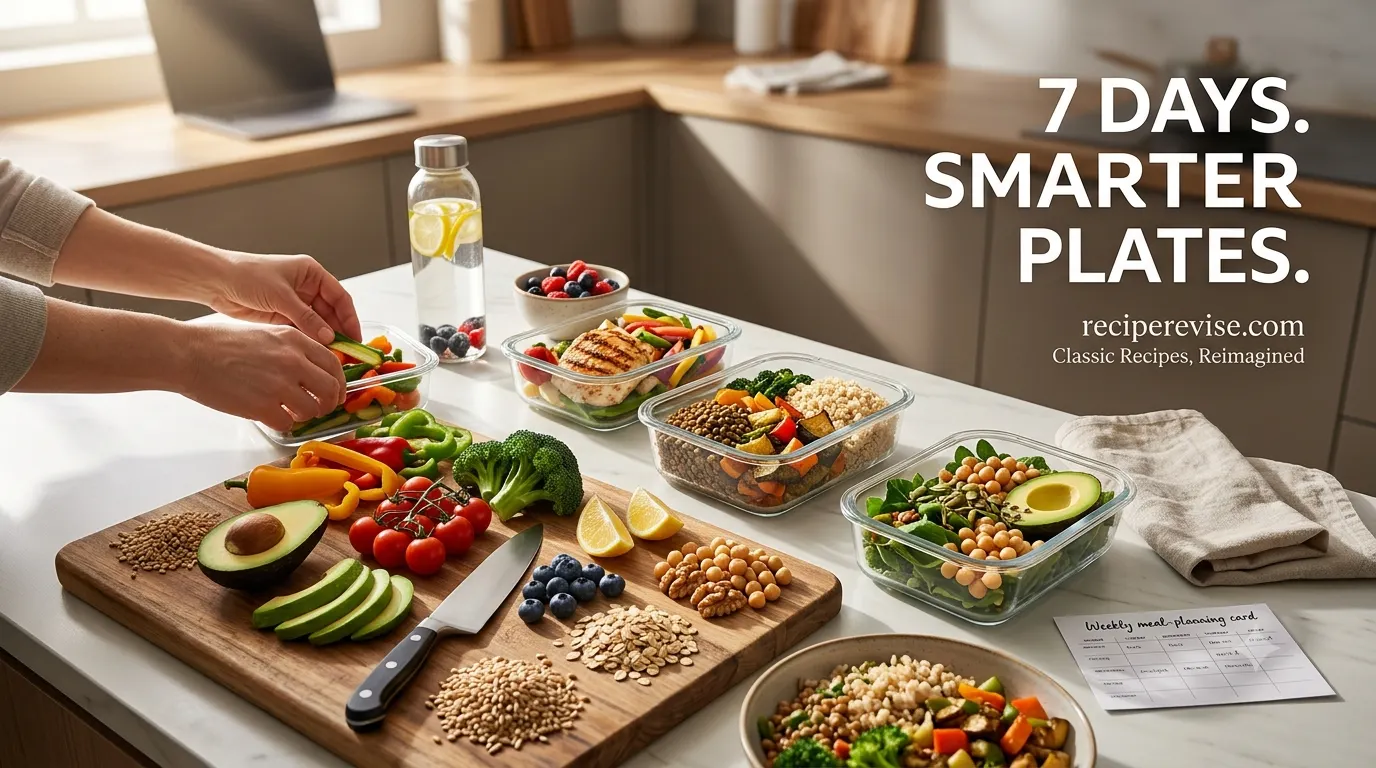
A practical 1,800-calorie fatty liver meal plan and beginner exercise routine for a sedentary American lifestyle, with diabetes-friendly meals and simple workouts.
Quick answer: A liver-friendly plan for MASLD combines a calorie-controlled eating pattern rich in vegetables, whole grains, legumes, lean protein, seafood, nuts, and unsaturated fats with regular physical activity. For someone with overweight or obesity, gradual weight loss can reduce liver fat, while at least 150 minutes of moderate activity weekly plus strength training supports metabolic health.
Medical disclaimer: This article is educational and is not a substitute for advice from your physician, registered dietitian, diabetes care team, or liver specialist. Because you have type 2 diabetes and a liver diagnosis, get medical clearance before beginning a new exercise program. Your clinician may need to adjust your plan based on your medications, glucose readings, blood pressure, cardiovascular health, joint health, and degree of liver fibrosis.
A practical starting point for fatty liver and MASLD
If your doctor has told you that you have fatty liver disease, you may be wondering what you are actually supposed to do Monday morning.
The answer does not require a crash diet, a cabinet full of supplements, or hours in a gym. The most useful approach is usually a sustainable combination of calorie control, better food quality, gradual weight loss, and regular physical activity.
That matters because MASLD—formerly called nonalcoholic fatty liver disease, or NAFLD—is closely associated with metabolic problems such as overweight or obesity, insulin resistance, type 2 diabetes, abnormal cholesterol and triglycerides, and physical inactivity.
This seven-day plan is designed around the lifestyle described in the brief: long workdays, limited time, convenience foods, a sedentary job, and type 2 diabetes.
The goal is not perfection. The goal is to create a week you could realistically repeat.
What does “fatty liver lifestyle” actually mean?
In practical terms, a meal plan + exercise routine for reversing fatty liver or MASLD/NAFLD means reducing the overall calorie load while shifting the quality of those calories.
Instead of building meals around refined carbohydrates, processed meat, sugary drinks, chips and large portions, you build them around:
- Vegetables
- Whole fruit
- Beans and lentils
- Whole grains
- Fish and seafood
- Skinless poultry
- Eggs
- Low-fat or nonfat dairy
- Nuts and seeds in controlled portions
- Olive oil and other unsaturated fats
- Water and unsweetened beverages
NIDDK recommends emphasizing vegetables, whole grains, whole fruit and healthy protein sources while reducing excess calories, saturated fat and added sugars. It also recommends replacing saturated and trans fats with unsaturated fats.
For someone with type 2 diabetes, the same strategy has another advantage: meals built around fiber-rich carbohydrates, protein and vegetables can make it easier to manage total carbohydrate intake and blood glucose.
The Science in Brief
Table 1: What matters most for MASLD
| Strategy | What it means in real life |
|---|---|
| Calorie control | Eat enough to support gradual weight loss without crash dieting |
| 1,800-calorie target | Use the physician-recommended target in this plan rather than guessing portions |
| Mediterranean-style eating | More vegetables, legumes, whole grains, seafood, nuts and unsaturated fats |
| Less saturated fat | Reduce fatty meats, butter, full-fat cheese and heavily processed foods |
| Less added sugar | Replace soda, sweet tea and sugary coffee with water or unsweetened drinks |
| More movement | Work toward at least 150 minutes of moderate activity each week |
| Strength training | Train major muscle groups at least twice weekly |
| Less sitting | Break up long periods at the desk with short movement breaks |
Why weight loss matters
For people with overweight or obesity and MASLD, weight loss can reduce liver fat. NIDDK notes that losing at least 3% to 5% of body weight can reduce liver fat, while approximately 7% to 10% may be needed to improve liver inflammation and fibrosis.
That does not mean you should attempt to lose 10% immediately.
Gradual, sustainable progress is preferable. NIDDK specifically warns that rapid weight loss and malnutrition can make liver disease worse.
For a person weighing 250 pounds, for example:
- 3% = 7.5 pounds
- 5% = 12.5 pounds
- 7% = 17.5 pounds
- 10% = 25 pounds
Those are longer-term targets, not seven-day goals.
Why diet quality matters
There is no single “fatty liver food.” Instead, the overall dietary pattern matters.
A Mediterranean-style pattern is particularly useful because it emphasizes vegetables, fruit, whole grains, legumes, nuts, seafood and unsaturated fats while limiting saturated fat and refined carbohydrates. AASLD educational material supports a calorie-deficit diet with fewer refined carbohydrates and saturated fats and greater intake of fiber and unsaturated fats.
Why exercise matters even if the scale does not move
Exercise is not simply a calorie-burning tool.
Regular physical activity improves cardiovascular fitness and can benefit blood glucose, blood pressure, cholesterol and weight management. NIDDK notes that physical activity can benefit NAFLD even without weight loss.
The general U.S. adult target is at least 150 minutes of moderate-intensity aerobic activity per week, plus muscle-strengthening activity on at least two days.
You do not have to accomplish that target immediately.
If you currently average fewer than 3,500 steps a day, starting with manageable walks is more realistic than suddenly attempting an hour of intense exercise.
Your 1,800-Calorie 7-Day Meal Plan
This plan uses ordinary U.S. grocery-store foods and is intentionally practical.
The calories are approximate rather than laboratory measurements. Brand differences, cooking methods and portion sizes can change the final calorie count.
Because you have type 2 diabetes, the 1,800-calorie target should be treated as the doctor-recommended starting target described in this plan, not as a universal prescription for every person with diabetes.
The core rule is simple:
Build meals around protein + vegetables + high-fiber carbohydrates + a controlled amount of healthy fat.
Day 1 — Start Simple
Table 2: Day 1 Meal Plan
| Meal | Food |
|---|---|
| Breakfast | ½ cup dry oatmeal cooked with 1 cup nonfat milk; ½ cup blueberries; 1 tablespoon chopped walnuts; cinnamon |
| Lunch | Whole-wheat turkey wrap with 4 oz sliced low-sodium turkey, lettuce, tomato, mustard and 1 small whole-wheat tortilla; side salad with 1 teaspoon olive oil and vinegar |
| Dinner | 4–5 oz baked salmon; ½ cup cooked brown rice; 1½ cups roasted broccoli and peppers |
| Snack | ¾ cup plain nonfat Greek yogurt with ½ cup strawberries |
Why it works:
Day 1 replaces the drive-through breakfast and sugary beverages with high-fiber carbohydrates, lean protein and unsaturated fats. Salmon provides a protein-rich centerpiece, while vegetables add volume without requiring large portions of refined starch.
Workday shortcut: Prepare the oatmeal and berries the night before. Put the yogurt in a cooler bag and make the turkey wrap before leaving home.
Day 2 — The Desk-Lunch Upgrade
Table 3: Day 2 Meal Plan
| Meal | Food |
|---|---|
| Breakfast | 2 eggs scrambled with spinach and tomato; 1 slice whole-grain toast; 1 small orange |
| Lunch | Chicken-and-bean bowl: 4 oz grilled chicken, ½ cup black beans, ½ cup brown rice, lettuce, tomato, salsa and ¼ avocado |
| Dinner | Turkey chili made with lean ground turkey, kidney beans, tomatoes, onions and peppers; side of steamed green beans |
| Snack | 1 medium apple with 1 tablespoon natural peanut butter |
Why it works:
Beans, vegetables and whole grains provide fiber while chicken, turkey and eggs provide protein. The avocado and peanut butter keep healthy fats in the plan without turning a nutritious meal into a high-calorie one.
Workday shortcut: Make four servings of turkey chili. Refrigerate three and freeze one.
Day 3 — Fast Food Without the Fast-Food Pattern
Table 4: Day 3 Meal Plan
| Meal | Food |
|---|---|
| Breakfast | Plain Greek yogurt, ½ cup berries, ¼ cup high-fiber whole-grain cereal and 1 tablespoon walnuts |
| Lunch | Grilled chicken salad with mixed greens, cucumber, tomatoes, carrots and 4 oz chicken; 1 tablespoon vinaigrette; 1 small whole-grain roll |
| Dinner | 4 oz baked chicken breast; 1 small roasted sweet potato; 1½ cups Brussels sprouts |
| Snack | 1 small pear and 12 almonds |
Why it works:
The meals are familiar American foods, but the portions and preparation are different. Instead of eliminating carbohydrates, this plan chooses higher-fiber sources and pairs them with protein and vegetables.
Restaurant fallback: If you must eat at a restaurant, choose grilled protein, vegetables and a smaller portion of whole-grain or starchy food. Skip the sugary drink.
Day 4 — Mediterranean-Style Midweek
Table 5: Day 4 Meal Plan
| Meal | Food |
|---|---|
| Breakfast | Vegetable omelet with 2 eggs, spinach, mushrooms and tomatoes; 1 slice whole-grain toast |
| Lunch | Lentil soup, about 1½ cups; side salad with vinegar-based dressing; small whole-grain roll |
| Dinner | 4 oz grilled white fish; ½ cup quinoa; roasted zucchini, peppers and onions |
| Snack | ¾ cup plain Greek yogurt with cinnamon and ½ cup berries |
Why it works:
Lentils and vegetables make the meal filling without relying on large amounts of meat or refined starch. The dinner combines seafood, whole grains and vegetables in a Mediterranean-style pattern.
AASLD educational material specifically encourages a Mediterranean-style dietary pattern for MASLD, emphasizing vegetables, fruits, nuts, legumes, seafood or plant proteins, and whole grains while reducing red and processed meat.
Day 5 — Convenience Without Giving Up Control
Table 6: Day 5 Meal Plan
| Meal | Food |
|---|---|
| Breakfast | Overnight oats: ½ cup oats, ¾ cup nonfat Greek yogurt, ½ cup blueberries and 1 tablespoon chia seeds |
| Lunch | Tuna-and-bean salad: 1 can water-packed tuna, ½ cup white beans, mixed greens, tomato, cucumber and lemon |
| Dinner | 4 oz lean turkey burger on a whole-wheat bun; large side salad; roasted vegetables |
| Snack | 1 medium apple with 12 almonds |
Why it works:
Nearly everything can be assembled in minutes. Keeping canned tuna, beans, frozen vegetables and whole-grain bread available makes the healthier choice easier during a 10-hour shift.
NIDDK recommends keeping healthier snacks available and choosing whole foods such as fruit and low-fat yogurt instead of highly processed snacks.
Day 6 — Family Dinner
Table 7: Day 6 Meal Plan
| Meal | Food |
|---|---|
| Breakfast | 2 eggs, 1 slice whole-grain toast, ½ grapefruit or a small serving of berries |
| Lunch | Turkey and vegetable soup; side salad; small whole-grain roll |
| Dinner | 4–5 oz grilled chicken fajitas with peppers and onions; 2 small corn tortillas; salsa; ¼ avocado; side of black beans |
| Snack | Plain Greek yogurt with berries |
Why it works:
This is designed to be a family meal rather than a separate “diet dinner.” Everyone can eat the same fajita filling while you control the tortillas, cheese, sour cream and portion size.
Day 7 — Reset and Prepare
Table 8: Day 7 Meal Plan
| Meal | Food |
|---|---|
| Breakfast | Oatmeal with berries, cinnamon and 1 tablespoon walnuts; 1 boiled egg |
| Lunch | Mediterranean chicken bowl with 4 oz chicken, ½ cup chickpeas, cucumber, tomatoes, greens and 1 tablespoon hummus |
| Dinner | 4 oz baked salmon or other fish; ½ cup brown rice; 1½ cups asparagus or broccoli |
| Snack | 1 small apple with 1 tablespoon peanut butter |
Why it works:
Day 7 deliberately resembles Day 1. Repeating successful meals reduces decision fatigue and gives you a template to use the following week.
Printable 7-Day Meal Summary
Table 9: Printable Meal Plan
| Day | Breakfast | Lunch | Dinner | Snack |
|---|---|---|---|---|
| 1 | Oatmeal, berries, walnuts | Turkey wrap + salad | Salmon, brown rice, broccoli | Greek yogurt + berries |
| 2 | Eggs, spinach, toast, orange | Chicken/bean bowl | Turkey chili + green beans | Apple + peanut butter |
| 3 | Greek yogurt + berries | Chicken salad | Chicken, sweet potato, Brussels sprouts | Pear + almonds |
| 4 | Vegetable omelet | Lentil soup + salad | Fish, quinoa, roasted vegetables | Greek yogurt + berries |
| 5 | Overnight oats | Tuna + white bean salad | Turkey burger + vegetables | Apple + almonds |
| 6 | Eggs + toast + fruit | Turkey vegetable soup | Chicken fajitas + beans | Greek yogurt + berries |
| 7 | Oatmeal + egg | Chicken/chickpea bowl | Salmon, brown rice, asparagus | Apple + peanut butter |
Grocery List for a Liver-Friendly Week
Grocery list callout: Buy foods that make the healthy choice convenient. You should be able to assemble several meals without cooking from scratch every day.
Protein
- Skinless chicken breast
- Lean ground turkey
- Salmon
- White fish
- Water-packed tuna
- Eggs
- Plain Greek yogurt
- Low-fat milk
Beans and legumes
- Black beans
- Kidney beans
- Chickpeas
- White beans
- Lentils
Vegetables
- Spinach
- Mixed greens
- Broccoli
- Brussels sprouts
- Green beans
- Asparagus
- Bell peppers
- Tomatoes
- Cucumbers
- Mushrooms
- Zucchini
- Carrots
- Onions
Fruit
- Apples
- Pears
- Oranges
- Berries
- Grapefruit, if appropriate for your medications
Medication note: Grapefruit can interact with certain medicines. If you take prescription medication, ask your pharmacist whether grapefruit is appropriate for you.
Whole grains and high-fiber carbohydrates
- Old-fashioned oats
- Brown rice
- Quinoa
- Whole-wheat bread
- Whole-wheat tortillas
- Whole-grain cereal
- Corn tortillas
- Sweet potatoes
Healthy fats
- Extra-virgin olive oil
- Walnuts
- Almonds
- Natural peanut butter
- Chia seeds
- Avocado
Flavor builders
- Salsa
- Mustard
- Vinegar
- Lemon
- Garlic
- Black pepper
- Cinnamon
- Herbs and spices
What to Drink
The easiest calorie reduction in this entire plan may be what you drink.
Your previous routine included regular cola, sweet tea and sugar-and-cream coffee. Those calories can accumulate without making you feel particularly full.
Choose:
- Water
- Sparkling water without added sugar
- Unsweetened tea
- Black coffee, if tolerated
- Coffee with a modest amount of unsweetened or low-calorie additions
Avoid making sugary drinks your everyday beverage.
NIDDK specifically recommends limiting foods and beverages containing excess calories and added sugars as part of weight management.
What about coffee?
Coffee is not a treatment for MASLD, and you should not use it as a substitute for diet, exercise or medical care.
If you enjoy black coffee, it can fit into this plan. However, coffee can interact with some medications and may worsen symptoms such as reflux or palpitations in some people. If you have been told to limit caffeine, follow that advice.
The 7-Day Beginner Exercise Routine
The biggest mistake would be going from almost no structured exercise to an aggressive workout program.
Your starting point is different.
The goal is to build a routine that survives a 10-hour workday.
The CDC recommends adults work toward at least 150 minutes of moderate activity each week and muscle-strengthening activity on at least two days. The CDC also emphasizes that activity can be divided into smaller chunks and that sitting less is beneficial.
How hard should you work?
Use the talk test.
Moderate intensity generally means your breathing and heart rate are noticeably faster, but you can still speak in short sentences.
You do not need to run.
For your first week, walking is the primary aerobic exercise.
Day 1 — 20-Minute Walk
Table 10: Day 1 Exercise
| Day | Activity | Duration | Intensity | Notes/Precautions |
|---|---|---|---|---|
| 1 | Brisk walking | 20 min | Easy → moderate | Start slowly for 5 min; stop if you develop chest pain, severe shortness of breath or dizziness |
Walk after dinner if possible.
The CDC specifically suggests starting with manageable activities such as a 10-minute walk after dinner and gradually building toward 150 minutes weekly.
Day 2 — Beginner Strength
Table 11: Day 2 Exercise
| Exercise | Sets × reps |
|---|---|
| Chair sit-to-stand | 2 × 8 |
| Wall push-up | 2 × 8 |
| Standing calf raise | 2 × 10 |
| Resistance-band row | 2 × 8 |
| Standing knee raise | 2 × 8 each side |
Rest 30–60 seconds between sets.
The goal is not to exhaust yourself.
The goal is to teach your body that resistance training is now part of your week.
NIDDK notes that resistance exercise can use weights, bands, walls, floors or household objects and can help maintain muscle mass during weight loss.
Day 3 — Two 10-Minute Walks
Table 12: Day 3 Exercise
| Day | Activity | Duration | Intensity | Notes/Precautions |
|---|---|---|---|---|
| 3 | Walk after lunch + walk after dinner | 10 + 10 min | Moderate | Use comfortable shoes; keep the pace conversational |
Breaking exercise into shorter sessions is completely acceptable.
For a desk worker, a 10-minute lunchtime walk may be easier to maintain than trying to schedule a 30-minute gym session.
Day 4 — Active Recovery
Table 13: Day 4 Exercise
| Day | Activity | Duration | Intensity | Notes/Precautions |
|---|---|---|---|---|
| 4 | Easy walk + mobility | 15–20 min | Easy | Keep it comfortable; focus on consistency |
This is not a “do nothing” day.
It is a recovery day.
Take an easy walk, stretch gently and avoid sitting for several uninterrupted hours.
Day 5 — 30-Minute Walk
Table 14: Day 5 Exercise
| Day | Activity | Duration | Intensity | Notes/Precautions |
|---|---|---|---|---|
| 5 | Brisk walking | 30 min | Moderate | Split into 15 + 15 minutes if necessary |
If your work schedule makes a continuous walk difficult, two 15-minute walks count toward your weekly activity.
Day 6 — Strength + Short Walk
Table 15: Day 6 Exercise
| Activity | Amount |
|---|---|
| Chair sit-to-stand | 2 × 10 |
| Wall push-ups | 2 × 10 |
| Resistance-band row | 2 × 10 |
| Calf raises | 2 × 12 |
| Standing hip extension | 2 × 8 each side |
| Easy walk | 10 min |
Keep the movements controlled.
Do not hold your breath while lifting or pushing.
Day 7 — Longer Easy Walk
Table 16: Day 7 Exercise
| Day | Activity | Duration | Intensity | Notes/Precautions |
|---|---|---|---|---|
| 7 | Comfortable outdoor walk | 35 min | Easy–moderate | Walk with family if possible |
This is also a good day to prepare your meals and schedule next week’s walks.
Weekly total
The first week gives you approximately 130–140 minutes of intentional aerobic activity, depending on whether you choose the 15- or 20-minute option on Day 4.
That is deliberate.
If you are currently inactive, there is no requirement to jump directly from almost no exercise to a demanding program.
During the following weeks, add approximately 5–10 minutes to selected walks until you consistently reach 150 minutes or more per week, assuming your medical team has cleared you for that level.
The Most Important Exercise May Happen at Your Desk
Your job requires long periods of sitting.
That means your exercise plan should not consist only of one walk at the end of the day.
Try a simple rule:
Every 30–60 minutes, get up and move for 2–5 minutes.
You can:
- Walk to refill your water bottle.
- Walk to the restroom.
- Take a short hallway walk.
- Perform several chair sit-to-stands.
- Stand while taking a phone call.
- Walk around the building during lunch.
- Take the stairs when appropriate.
The CDC’s current adult activity guidance explicitly emphasizes “move more, sit less.” Even smaller amounts of activity can provide health benefits.
These short movement periods do not replace your structured exercise sessions. They make an otherwise sedentary workday less sedentary.
What If You Cannot Finish the Workout?
Do not turn one missed workout into a missed week.
If 30 minutes feels like too much:
Do 10 minutes.
If 10 minutes feels like too much:
Do 5 minutes.
If your knees hurt:
Talk with your clinician or physical therapist about lower-impact options such as cycling or water-based exercise.
If you are exhausted after work:
Walk before dinner instead of after dinner.
The best exercise program is the one you can safely repeat.
Watch for This
Important safety checklist
Stop exercising and seek urgent medical attention for symptoms such as chest pressure or pain, fainting, severe unexplained shortness of breath, or other serious symptoms.
Because you have type 2 diabetes: physical activity can lower blood glucose. If you use insulin or certain diabetes medicines, ask your healthcare team whether you need to check glucose before or after exercise and whether you should carry a source of rapidly absorbed carbohydrate. CDC notes that physical activity, missed meals and diabetes medicines can contribute to low blood sugar.
Do not dramatically cut calories on your own. Rapid weight loss and inadequate nutrition can be harmful.
Do not assume every supplement is liver-friendly. Some herbal products can damage the liver. Discuss supplements with your healthcare professional.
Medication and Interaction Considerations
Diet and exercise are important, but they do not replace prescribed treatment.
The treatment landscape for MASH has changed. In March 2024, the FDA approved Rezdiffra (resmetirom) for adults with noncirrhotic NASH/MASH with moderate-to-advanced liver fibrosis, to be used alongside diet and exercise.
That does not mean everyone with fatty liver should take it.
Treatment depends on the individual’s diagnosis, fibrosis stage, medical history and clinician assessment.
If you are prescribed resmetirom, your clinician or pharmacist should review your medication list. FDA labeling identifies clinically important interactions involving certain CYP2C8 and OATP inhibitors and several statins.
The practical rule is:
Do not start, stop or change a prescription medication because of this meal plan.
Tell your healthcare team about:
- Diabetes medicines
- Cholesterol medicines
- Blood thinners
- Blood-pressure medicines
- Supplements
- Herbal products
- Over-the-counter medications
If you take diabetes medication that can cause hypoglycemia, exercise and reduced food intake may alter your glucose levels. CDC notes that physical activity can contribute to low blood glucose, particularly in people using insulin or certain diabetes medications.
Can You Still Eat at American Restaurants?
Yes.
A liver-friendly lifestyle does not require eating every meal at home.
At a sandwich shop
Choose:
- Whole-grain bread
- Turkey or grilled chicken
- Plenty of vegetables
- Mustard or a light dressing
- Water or unsweetened tea
Limit:
- Mayo-heavy sandwiches
- Bacon
- Large amounts of cheese
- Chips
- Sugary drinks
At a Mexican restaurant
Choose:
- Grilled chicken or fish
- Beans
- Fajitas
- Salsa
- Vegetables
- Small portions of tortillas, rice or both
Limit:
- Fried tortilla chips
- Large cheese portions
- Sour cream-heavy meals
- Sugary beverages
At a burger restaurant
If a burger is what is available, choose a smaller grilled burger, skip or reduce fries, add a side salad when available, and choose water or an unsweetened drink.
One restaurant meal does not determine your liver health.
Your overall pattern does.
FAQ: Questions People Actually Search
What is the best 7-day meal plan for fatty liver and diabetes?
A useful seven-day meal plan for fatty liver and diabetes emphasizes vegetables, whole fruit, whole grains, beans, lean protein, seafood, nuts and unsaturated fats while controlling total calories and added sugar. Portion sizes should be individualized, particularly when diabetes medications are involved. The 1,800-calorie plan above is appropriate only when that calorie target has been recommended for you by your healthcare professional.
Can a sedentary lifestyle cause fatty liver disease?
Physical inactivity is associated with MASLD and other metabolic risk factors. Sedentary behavior often occurs alongside excess calorie intake, weight gain, insulin resistance and poor cardiovascular fitness. Increasing activity can help metabolic health and may benefit fatty liver even without weight loss. Federal guidance recommends adults work toward at least 150 minutes of moderate aerobic activity weekly plus muscle-strengthening activity on at least two days.
How much weight do I need to lose to improve fatty liver?
Even modest weight loss can help. NIDDK reports that losing at least 3% to 5% of body weight can reduce liver fat, while approximately 7% to 10% may be needed to improve liver inflammation and fibrosis. Weight loss should be gradual rather than achieved through crash dieting.
What foods should I avoid with fatty liver?
There is no single forbidden food list, but it is useful to limit sugar-sweetened beverages, excess added sugars, highly processed foods, large portions, saturated fats and refined carbohydrates. Replace these with vegetables, whole grains, legumes, lean protein, seafood and unsaturated fats. NIDDK recommends limiting overall calories and replacing saturated and trans fats with unsaturated fats.
Is a Mediterranean diet good for MASLD?
Yes. A Mediterranean-style eating pattern is commonly encouraged for MASLD because it emphasizes vegetables, fruit, legumes, nuts, seafood, whole grains and unsaturated fats while reducing saturated fat and refined carbohydrates. AASLD educational material specifically supports this pattern within a calorie-deficit approach.
Can exercise reverse fatty liver without weight loss?
Physical activity can provide benefits even when the scale does not change. NIDDK notes that physical activity alone can benefit NAFLD, while regular exercise also supports blood glucose, blood pressure, cardiovascular fitness and weight management. Combining physical activity with an appropriate eating plan is generally more effective for long-term metabolic health than relying on exercise alone.
Is 1,800 calories enough for fatty liver?
An 1,800-calorie diet may be an appropriate starting point for some people, but calorie needs vary by body size, age, sex, activity level, medications and health status. This plan uses 1,800 calories because that is the clinician-recommended target specified in the scenario. It should not be treated as a universal prescription. A registered dietitian or physician can adjust the target if weight loss is too rapid, hunger is excessive, glucose control changes, or nutritional needs are not being met.
A Simple Weekly Routine You Can Actually Keep
The first week is not about becoming a different person.
It is about replacing a few high-impact habits.
Replace this:
Drive-through breakfast
With:
Oatmeal + berries + walnuts
Replace this:
Regular cola or sweet tea
With:
Water or unsweetened tea
Replace this:
Chips and candy at the desk
With:
Fruit + Greek yogurt or a controlled serving of nuts
Replace this:
Frozen pizza or boxed pasta every night
With:
A simple plate of lean protein + vegetables + whole grain
Replace this:
No structured exercise
With:
Walking most days + strength training twice a week
Replace this:
Eight to ten hours of uninterrupted sitting
With:
Short movement breaks throughout the workday
These changes may look small.
They are not.
They directly target the behaviors that make a sedentary lifestyle difficult to manage.
Related Post from Recipe Revise
Related guide: 7-Day Meal Plan and Exercise Plan for High Blood Pressure and Diabetes
How to Make the Plan Work With a 10-Hour Shift
Your work schedule is probably the biggest barrier—not your knowledge of nutrition.
So build the plan around your schedule.
Sunday: 60–90 minute preparation
Prepare:
- 4–5 portions of chicken
- A pot of turkey chili
- Brown rice or quinoa
- Washed salad greens
- Roasted vegetables
- Hard-boiled eggs
- Individual yogurt portions
Then portion snacks into containers.
You are not trying to prepare seven completely different meals.
You are creating components that can be assembled quickly.
Keep an emergency work meal
Keep a shelf-stable backup such as:
- Low-sodium tuna
- Whole-grain crackers
- Unsalted nuts
- Canned beans
- Fruit
- Plain oatmeal
This reduces the chance that being busy automatically turns into fast food.
Make your environment do the work
Keep:
- Water at your desk
- Fruit visible
- Healthy snacks accessible
- Candy and chips out of your immediate workspace
NIDDK recommends keeping healthier snacks available and making healthier choices easier to maintain.
Your 30-Day Progress Checklist
Do not judge the success of this plan solely by the number on your bathroom scale.
Track behaviors.
Week 1
- Follow the meal structure most days
- Eliminate or sharply reduce sugary drinks
- Walk at least five days
- Complete two beginner strength sessions
- Take movement breaks during work
Week 2
- Reach approximately 150 minutes of weekly moderate activity if medically cleared
- Continue two strength sessions
- Prepare meals at least once
- Reduce restaurant portions
Week 3
- Repeat meals that were easiest to maintain
- Increase walking time slightly if comfortable
- Continue movement breaks
- Review glucose patterns with your healthcare team if needed
Week 4
- Assess consistency rather than perfection
- Check weight according to your clinician’s recommendations
- Review blood pressure or glucose trends if you monitor them
- Ask your clinician about follow-up liver testing when appropriate
The objective is to turn seven days into a repeatable routine.
Key Takeaways
- MASLD is not simply a liver problem. It is strongly connected to metabolic health, including overweight or obesity, insulin resistance, type 2 diabetes and abnormal blood lipids.
- Gradual weight loss can reduce liver fat. Losing 3%–5% of body weight can reduce liver fat, while approximately 7%–10% may be needed for improvements in inflammation and fibrosis.
- Do not crash diet. Rapid weight loss and malnutrition can make liver disease worse.
- Use a Mediterranean-style pattern. Emphasize vegetables, fruit, legumes, whole grains, seafood, nuts and unsaturated fats.
- Cut sugary beverages first. Soda, sweet tea and heavily sweetened coffee can add substantial calories without much satiety.
- Aim toward 150 minutes of moderate activity each week. You can divide the time into smaller sessions.
- Strength train at least twice weekly. Beginner exercises such as chair sit-to-stands, wall push-ups and resistance-band rows can work major muscle groups.
- Break up sitting time. A desk job does not have to mean eight or ten hours of uninterrupted sitting.
- Diabetes changes the safety equation. Exercise and changes in food intake can affect blood glucose, especially when certain diabetes medicines are involved.
- Medication decisions belong with your healthcare team. Diet and exercise complement—not replace—appropriate medical treatment.
- Consistency beats perfection. One imperfect meal does not ruin the plan. Returning to the next planned meal is more useful than giving up.
Bottom line: The most realistic fatty liver lifestyle is not an extreme diet. It is a repeatable system: controlled portions, mostly minimally processed foods, fewer sugary drinks and refined carbohydrates, regular walking, twice-weekly strength training, and less uninterrupted sitting. Start at a level you can safely maintain, then build from there.
Editorial credibility note
This article was developed as consumer health content and fact-checked against current U.S. government and major liver/clinical sources, including NIDDK, CDC, FDA and AASLD educational material. It is not presented as individualized medical advice and does not substitute for review by a physician, registered dietitian, diabetes care professional or liver specialist.
Sources
- National Institute of Diabetes and Digestive and Kidney Diseases (NIDDK) — Eating, Diet, & Nutrition for NAFLD/NASH
NIDDK: Eating, Diet, & Nutrition for NAFLD/NASH - NIDDK — Treatment for NAFLD & NASH
NIDDK: Treatment for NAFLD & NASH - NIDDK — Eating & Physical Activity to Lose or Maintain Weight
NIDDK: Eating & Physical Activity to Lose or Maintain Weight - Centers for Disease Control and Prevention — Adult Physical Activity Guidelines
CDC: Adult Activity Guidelines - CDC — Get Active: Diabetes
CDC: Get Active - CDC — Managing Blood Sugar / Hypoglycemia
CDC: Manage Blood Sugar
CDC: Low Blood Sugar (Hypoglycemia) - FDA — Rezdiffra approval for MASH/NASH with moderate-to-advanced fibrosis
FDA: Rezdiffra Approval Announcement - FDA — Rezdiffra prescribing information and drug interactions
FDA: Rezdiffra Prescribing Information - American Association for the Study of Liver Diseases (AASLD) — MASLD lifestyle and nutrition education
AASLD: MASLD Treatment Infographic - American Association for the Study of Liver Diseases — GLP-1 agonists, diet and exercise in fatty liver disease
AASLD: GLP-1 Agonists and Fatty Liver Disease