
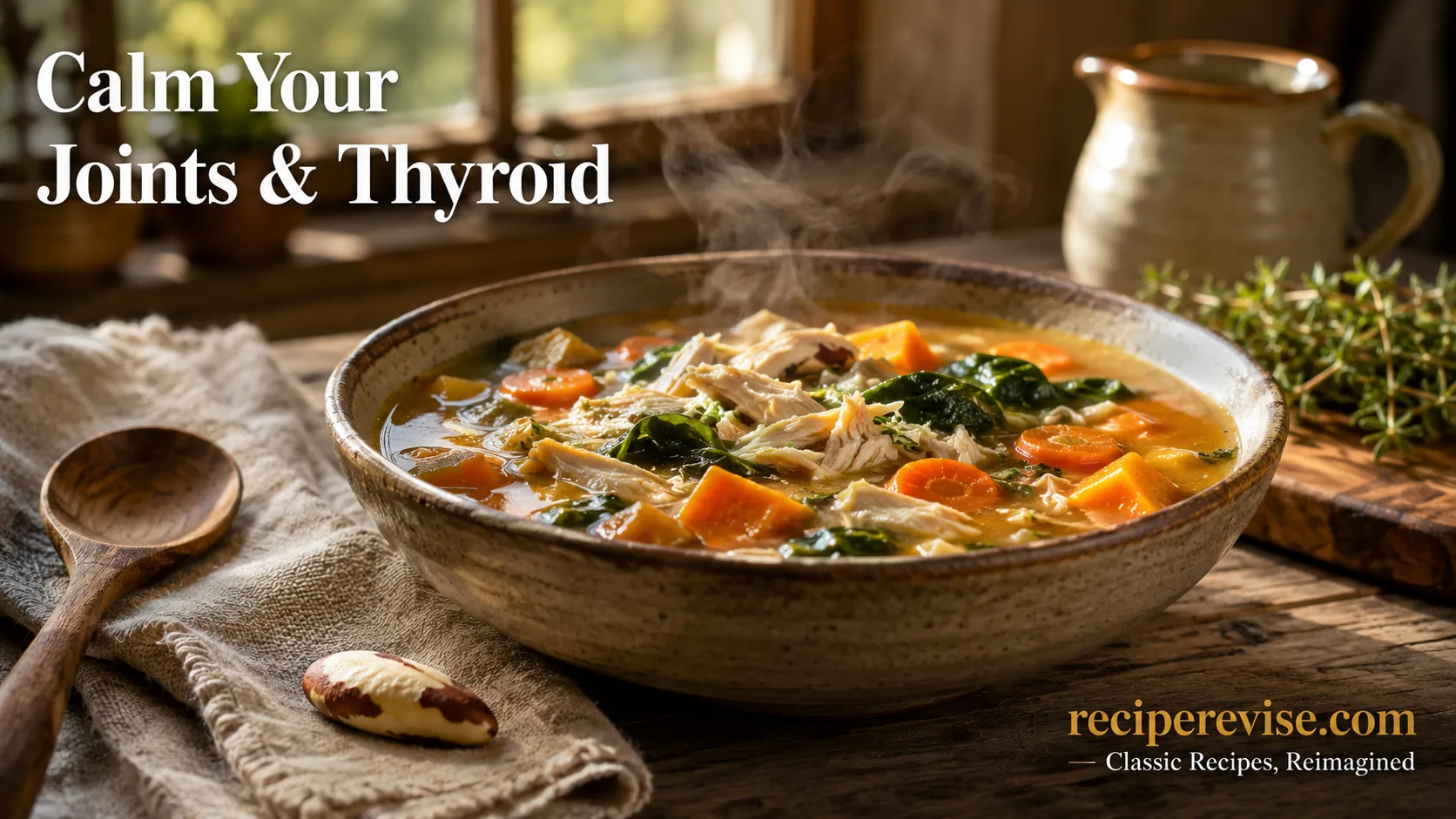
Discover a science-backed 7-day anti-inflammatory meal plan and healing bone broth recipe designed to manage rheumatoid arthritis and Hashimoto’s thyroiditis.
Direct Answer: Managing concurrent rheumatoid arthritis (RA) and Hashimoto’s thyroiditis requires an anti-inflammatory baseline that tamps down systemic immune overactivity while supplying targeted micronutrients like selenium and zinc. By adopting a modified Mediterranean dietary pattern and eliminating molecular mimicry triggers like gluten, readers can simultaneously protect vulnerable joint cartilage and support optimal thyroid hormone conversion.
The Clinical Crossroads: Why Autoimmune Overlaps Demand a Unified Plate
Double Immune Jeopardy
Managing two distinct autoimmune conditions feels less like managing a health routine and more like navigating a high-stakes geopolitical summit where both delegates are furious. When rheumatoid arthritis targets your synovial joint linings while Hashimoto’s thyroiditis attacks your thyroid gland via circulating autoantibodies, your immune system is essentially staging a multi-front rebellion. Clinical immunology data shows that sharing one autoimmune diagnosis increases the statistical probability of developing a second by up to thirty percent due to shared genetic loci like the HLA-DRB1 gene.
Molecular Mimicry Mechanics
Inflammation in one department inevitably spills over into the neighboring zip code. Intestinal permeability—commonly known as leaky gut—allows partially digested proteins to cross mucosal barriers, where structural similarities between dietary gluten and thyroid peroxidase enzymes trigger cross-reactivity. According to findings published in the PMC Autoimmune Thyroid Disorders Study, dietary modulation serves as a primary immunomodulatory lever because roughly seventy percent of your immune system resides directly within gut-associated lymphoid tissue.
How Can a Modified Mediterranean Approach Simultaneously Target Joint Pain and Thyroid Dysfunction?
Direct Answer: The modified Mediterranean diet reduces systemic C-reactive protein levels and protects joint spaces by flooding the body with monounsaturated fats and polyphenols, while omitting inflammatory proteins that provoke thyroid flare-ups. This dietary matrix establishes a stable biochemical foundation that calms both synovial inflammation and glandular tissue destruction.
Joint-Lubricating Monounsaturates
Extra-virgin olive oil and wild-caught cold-water fish operate as natural COX-2 enzyme inhibitors, effectively blunting the inflammatory cytokines that cause morning joint stiffness and swelling. Clinical evaluations highlighted by the Arthritis Foundation demonstrate that switching to an antioxidant-dense Mediterranean baseline significantly reduces tender joint counts within twelve weeks.
Glandular Micronutrient Support
Thyroid hormone synthesis is an energy-intensive metabolic ballet requiring precise enzymatic catalysts. Selenium and zinc act as indispensable cofactors for iodothyronine deiodinase enzymes, which safely convert storage-form thyroxine (T4) into active triiodothyronine (T3). Without adequate dietary selenium—easily sourced from one or two daily Brazil nuts—your cellular machinery stalls, leaving fatigue and sluggish metabolism entrenched even when circulating hormone levels appear normal on paper.
The Dietary Solution Matrix: Which Foods Fix Multiple Autoimmune Problems at Once?
| Dual-Action Ingredient | Primary Target: Rheumatoid Arthritis | Primary Target: Hashimoto’s Thyroiditis | Key Biochemical Mechanism |
|---|---|---|---|
| Wild-Caught Salmon | Lowers C-reactive protein (CRP) | Supports cellular membrane integrity | Delivers high-potency EPA and DHA omega-3 fatty acids |
| Brazil Nuts | Reduces oxidative stress in synovial fluid | Supplies daily selenium requirements | Acts as a direct cofactor for T4-to-T3 thyroid conversion |
| Leafy Greens (Spinach, Chard) | Suppresses systemic joint inflammation | Provides magnesium for metabolic balance | Rich in chlorophyll, carotenoids, and non-heme iron |
| Extra-Virgin Olive Oil | Inhibits inflammatory prostaglandin production | Protects endocrine tissue from oxidative damage | High concentration of oleocanthal and polyphenols |
What Does a Practical 7-Day Autoimmune Meal Plan Look Like for Busy Schedules?
Direct Answer: A sustainable weekly meal plan for dual autoimmune management prioritizes batch-prepped proteins, gluten-free complex carbohydrates, and antioxidant-rich produce to minimize kitchen fatigue while stabilizing blood sugar and immune responses. This structured approach removes daily decision-making friction, ensuring consistent adherence without overwhelming your energy reserves.
The Weekly Nutritional Matrix
| Day | Breakfast | Lunch | Dinner |
|---|---|---|---|
| Day 1 | Chia seed pudding with wild blueberries and crushed walnuts. | Spinach salad with shredded chicken, cucumber, and extra-virgin olive oil. | Wild-caught salmon fillet served over roasted sweet potatoes and steamed asparagus. |
| Day 2 | Warm certified gluten-free oatmeal topped with pumpkin seeds and a dash of Ceylon cinnamon. | Leftover roasted salmon served over a bed of dark mixed greens and diced avocado. | Turkey and vegetable stir-fry prepared with coconut aminos and freshly grated ginger. |
| Day 3 | Green smoothie blended with avocado, fresh spinach, grated ginger, and clean collagen protein. | Turkey stir-fry leftovers wrapped snugly in grain-free coconut wraps. | Baked Pacific cod with a squeeze of fresh lemon, garlic, organic quinoa, and steamed broccoli. |
| Day 4 | Two pasture-raised poached eggs with sautéed crimini mushrooms and spinach in avocado oil. | Quinoa bowl featuring diced cucumber, Kalamata olives, grilled chicken, and tahini dressing. | Grass-fed turkey patties wrapped in crisp butter lettuce leaves, served with baked zucchini fries. |
| Day 5 | Berry and spinach protein smoothie made with unsweetened organic almond milk. | Leftover lettuce-wrapped turkey burgers with a side mixed green salad. | Sheet-pan lemon garlic chicken breasts paired with roasted sweet potato wedges and Brussels sprouts. |
| Day 6 | Chia seed pudding topped with sliced fresh strawberries and raw pumpkin seeds. | Leftover sheet-pan lemon garlic chicken and sweet potato wedges. | Wild-caught white fish tacos served in crisp green cabbage leaves with a cilantro-lime slaw. |
| Day 7 | Sweet potato hash sautéed with ground turkey, fresh spinach, and a touch of minced garlic. | Large mixed green salad featuring shredded chicken, walnuts, mixed berries, and olive oil dressing. | Slow-cooked bone broth stew loaded with tender carrots, celery, onions, and shredded poultry. |
Autoimmune-Friendly Snack Rotation
When mid-afternoon energy slumps threaten your dietary discipline, reach for targeted nourishment that supports both joints and thyroid function. Enjoy exactly one or two Brazil nuts daily to satisfy your selenium threshold without risking toxicity, or dip crisp cucumber slices into homemade guacamole rich in joint-lubricating monounsaturated fats. A warm mug of grass-fed bone broth supplies gut-healing amino acids like glycine, reinforcing intestinal barrier integrity against systemic immune triggers. For readers exploring broader metabolic balance, our The Metabolic Triad Meal Plan offers additional structured guidance, while our One-Week Prediabetes Meal Plan provides further anti-inflammatory meal architecture.
Featured Recipe: Slow-Cooked Healing Bone Broth & Shredded Chicken Stew
Why It Works
This nutrient-dense stew combines slow-extracted gelatin and glycine from bone broth with selenium-rich poultry and anti-inflammatory aromatics. According to clinical data highlighted by the American Thyroid Association, foundational gut repair through collagen-rich broths is essential for dampening systemic antibody production in complex autoimmune presentations.
Recipe Card
- Prep time: 15 minutes
- Cook time: 4 hours (or 6 hours on low in a slow cooker)
- Yield: 4 generous servings
- Course: Main Course / Soup
Ingredients
- 4 cups organic, pasture-raised chicken bone broth
- 2 pounds bone-in, skin-on pasture-raised chicken thighs
- 2 medium sweet potatoes, peeled and cubed into bite-sized pieces
- 3 carrots, sliced into rounds
- 3 stalks celery, diced
- 1 medium yellow onion, chopped
- 3 cloves garlic, minced
- 1 tablespoon fresh ginger, grated
- 2 tablespoons extra-virgin olive oil
- 1 teaspoon sea salt
- 1/2 teaspoon freshly cracked black pepper (omit if sensitive to nightshades)
- 3 cups fresh baby spinach
Instructions
- Sear the Aromatics: Heat the extra-virgin olive oil in a heavy-bottomed Dutch oven over medium heat. Add the chopped yellow onion, minced garlic, and grated ginger, sautéing gently for four minutes until translucent and fragrant.
- Brown the Protein: Nestle the chicken thighs into the pot, searing them for three minutes per side to build deep savory flavor before adding the liquids.
- Simmer the Root Vegetables: Pour in the chicken bone broth, bringing the mixture to a gentle boil before dropping in the cubed sweet potatoes, sliced carrots, and diced celery.
- Slow Cook to Perfection: Reduce the heat to low, cover the Dutch oven tightly, and let the stew simmer undisturbed for three hours until the chicken meat easily falls away from the bone.
- Shred and Finish: Remove the chicken thighs with a slotted spoon, strip the meat off the bones, discard the skin and bones, and return the tender shredded chicken to the pot. Stir in the fresh baby spinach until it wilts gracefully into the broth just before serving.
Nutritional Notes
- Calories: 385 kcal per serving
- Protein: 32 g
- Carbohydrates: 24 g
- Healthy Fats: 18 g
Clinical Customization Tips & Disclaimer
Navigating dual autoimmune conditions is an exercise in bio-individual listening rather than dogmatic restriction. While a modified Mediterranean framework successfully lowers systemic inflammation for the vast majority of patients, strict elimination protocols like the Autoimmune Protocol (AIP) diet should be approached with caution. Eliminating entire food groups without clinical supervision can precipitate micronutrient deficiencies and disordered eating patterns. Always collaborate closely with a registered dietitian or clinical rheumatologist to tailor your nutritional strategy to your unique lab panels and symptom flares.
Frequently Asked Questions
Should I completely eliminate nightshades if I have rheumatoid arthritis?
Not necessarily. While nightshades like tomatoes and peppers are restricted in strict elimination diets, clinical guidance from rheumatology specialists indicates that nightshade sensitivity is highly individual. Eliminate them only if you observe a direct, reproducible symptom flare after consumption.
How many Brazil nuts can I safely eat every day for thyroid support?
Stick strictly to one or two Brazil nuts per day. Because Brazil nuts are exceptionally concentrated in selenium, consuming more than two daily can lead to over-supplementation and potential selenium toxicity over time.
Can gluten intolerance worsen Hashimoto’s antibody levels?
Yes. Molecular mimicry between the protein structure of gluten and thyroid tissue can cause the immune system to mistakenly attack the thyroid gland. Removing gluten often helps stabilize circulating anti-TPO antibody counts in sensitive individuals.
Why is extra-virgin olive oil emphasized over other cooking oils?
Extra-virgin olive oil contains powerful polyphenols such as oleocanthal, which exhibit pharmacological properties similar to non-steroidal anti-inflammatory drugs without harming gastric mucosal linings.
If your joints feel like they were forged in a damp cellar and your thyroid is running on a dying battery, remember that your kitchen is where the truce begins. Simmer a pot of broth, listen to what your body whispers after dinner, and keep refining your plate one nourishing meal at a time.
— Pepper Sage