
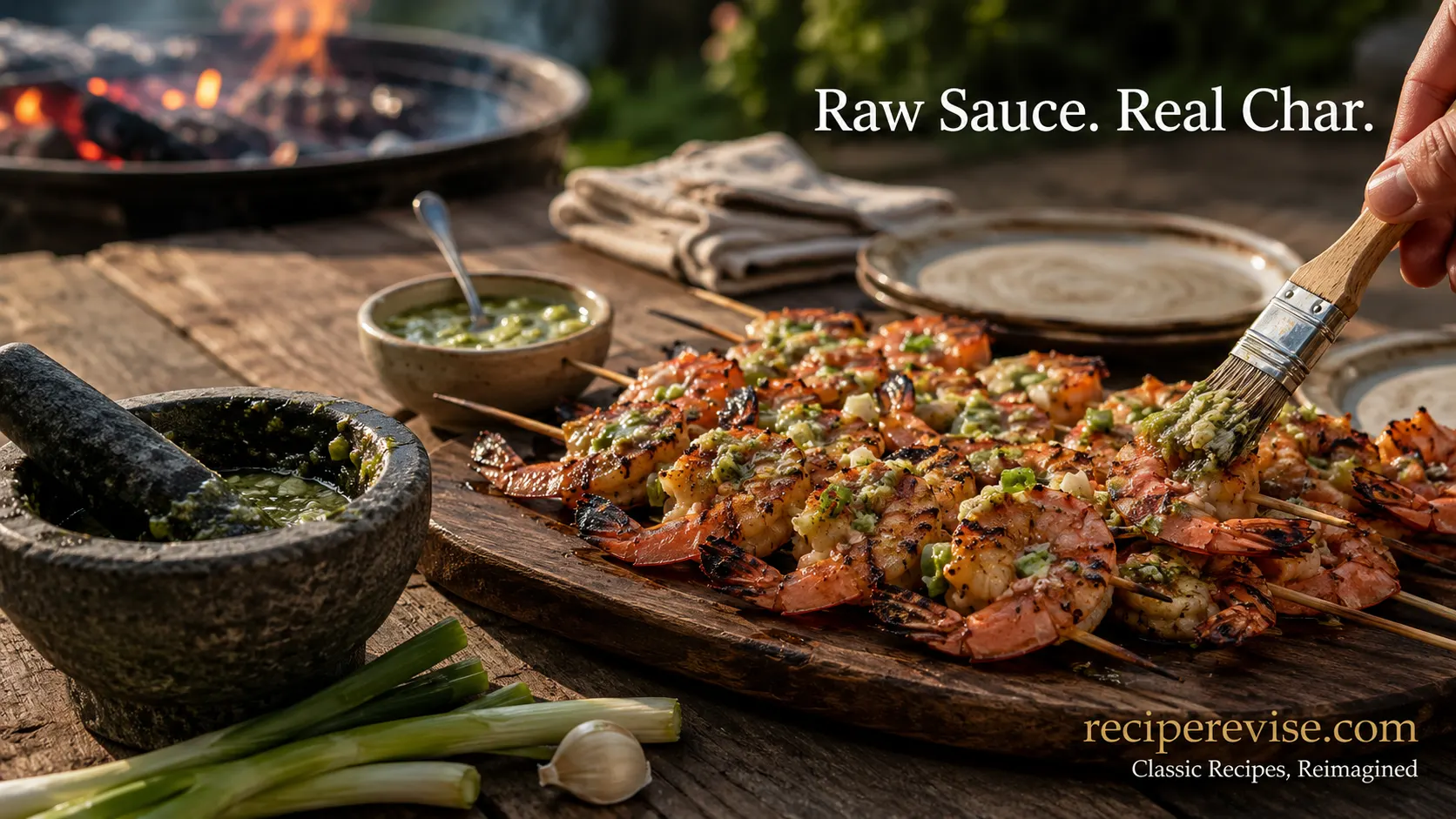
Angolan grilled shrimp gets its punch from a raw garlic-scallion-vinegar sauce, no cooking required. Research-backed grilling tips and a chef-inspired variation inside.
Editorial Note
Camarão grelhado com molho cru is a grilled prawn dish from Angola, seasoned not with a cooked sauce but with a raw paste of scallions, garlic, cumin, and white vinegar, pounded together and brushed on both before and after the fire touches the shrimp. Along Angola’s Atlantic coast it’s a staple of open-hearth cooking, the kind of dish that comes together between the market run and the first coals catching — no reduction, no simmering, just a sharp, herbal paste doing the heavy lifting. That’s the “Simple Food, Slower Days” instinct at its most literal: a sauce built in the time it takes the grill to heat, with nothing on the stove. The one thing worth guarding against is treating the sauce like a chunky salsa — grind it properly into a paste, or the garlic and cumin won’t cling to the shrimp the way they should. Once you’ve got the base down, this one opens up in more directions than its short ingredient list suggests.
— Pepper Sage
A Master Twist
Camarão grelhado com molho cru works because of contrast: sweet, quick-cooked shrimp against a raw, sharp, vinegar-forward sauce with almost no fat to soften it. That tension is the thing to protect no matter which direction you take it. Here are three ways to push it further.
The Bone-Dry Blaze
The biggest risk with this dish isn’t the sauce — it’s the grill. Shrimp go from perfect to rubbery in about ninety seconds, and a damp shrimp on a hot grate steams before it chars. The fix chefs use is drying the shrimp aggressively before it ever sees flame: pat it dry, then leave it uncovered in the fridge for an hour so the surface moisture evaporates and the shells brown properly once they hit heat, a technique Outside adapted from J. Kenji López-Alt. Skewer the prawns tight, shoulder to shoulder rather than spaced out — the contact between them shields the interior from the direct heat and buys you a few extra seconds of char time without overcooking the middle. Pull them a shade earlier than instinct says, too: professional kitchens take shrimp off around 140°F and let carryover heat finish the job, which is how you keep that snap instead of a rubbery bite, a habit wood-fired grill cooks rely on for consistency at scale. If you want a second sauce in your back pocket for the shrimp that don’t get the molho cru treatment, a cowboy butter built for shrimp and steak alike makes a fair rival — richer, but it plays the same “brush it on twice” game.
Chef’s Intel: The dry-then-hot approach is standard restaurant practice for any fast-cooking seafood — moisture is the enemy of char, full stop. Watch for: Pulling too late. If the shrimp look fully opaque and tightly curled on the grill, they’re already past the point of no return.
Mushrimp Molho Cru
For a vegetarian version that isn’t just “put the sauce on something else,” king oyster mushroom stems are the closest plant-based match to shrimp’s dense, slightly springy bite — slice them on a bias into curls, and they hold a marinade the way shrimp does rather than turning to mush. This isn’t a fringe substitution: food scientists have specifically engineered mushroom-based “shrimp” analogues from pink oyster and lion’s mane varieties, chasing that same snap-and-chew texture through fruiting-body structure rather than binders, published research on the resulting “Mushrimps” shows. Marinate the mushroom curls in the molho cru for twenty minutes before grilling — longer than you’d ever marinate actual prawns, since mushrooms need time to take on flavor that shrimp absorb almost instantly. Finish with a squeeze of lime for the citrus note the paste doesn’t otherwise carry.
Chef’s Intel: Mushroom-based shrimp substitutes are a genuine area of food-science development right now, not just a home-kitchen workaround — the texture engineering behind them is real. Watch for: Over-marinating past thirty minutes. The vinegar in molho cru will start breaking the mushrooms down rather than seasoning them.
Angola Meets Bahia
Angola’s coastal cooking and Brazil’s are cousins by history — centuries under the same colonial trade routes left both with a fondness for raw, vinegar-based table sauces spooned over grilled protein, and 196 Flavors traces this exact dish’s kinship to that shared Lusophone food heritage. Lean into that connection: swap a portion of the water in the molho cru for a splash of coconut milk, nodding to Bahia’s moqueca tradition, and stir a small spoon of finely diced tomato into the finished sauce for color and a touch of acidity-balancing sweetness — essentially building a bridge toward vinagrete, Brazil’s own tomato-onion-vinegar condiment for grilled meat and seafood. Keep the coconut milk restrained — a tablespoon or two per batch — so it rounds the sauce out rather than turning it into a curry.
Chef’s Intel: This isn’t invented fusion — it’s following a real culinary lineage that already connects these two coastlines. Watch for: Too much coconut milk. The whole point of molho cru is its sharpness; drown that and you’ve made a different sauce entirely.
However you take it, the shrimp still have to hit that hot grate fast and come off before they seize up — no amount of sauce reinvention fixes a rubbery prawn.
— Pepper Sage
FAQ
Is this dish Brazilian or Angolan? Angolan.
The name and ingredients (scallions, garlic, cumin, vinegar) sometimes get mistaken for Brazilian cooking because both countries share Portuguese colonial food history, but camarão grelhado com molho cru specifically comes from Angola’s Atlantic coast.
How do I know when the shrimp are actually done?
Watch color, not the clock — pull them the moment they turn opaque and pink with a slight char, since shrimp left on the grill even 30 seconds too long turn tough. If you’re timing it, that’s roughly 2-3 minutes per side depending on size.
Can I make the molho cru ahead of time?
Yes — it’s a raw paste with no cooked components, so it holds well covered in the fridge for a day or two before grilling. The garlic and vinegar actually mellow and meld a bit with a short rest.
How long do leftovers keep, and can I freeze them?
Cooked shrimp keeps 3-4 days in an airtight container in the fridge; get it chilled within two hours of cooking. Freezing works too, though the texture softens some — plan to use frozen leftovers within a couple of months for best quality.
What can I use instead of white wine vinegar in the sauce?
Rice vinegar or apple cider vinegar both work as a substitute — you’ll lose a little of the sharper, more acidic edge white wine vinegar gives, so start with slightly less and taste before adding the full amount.