
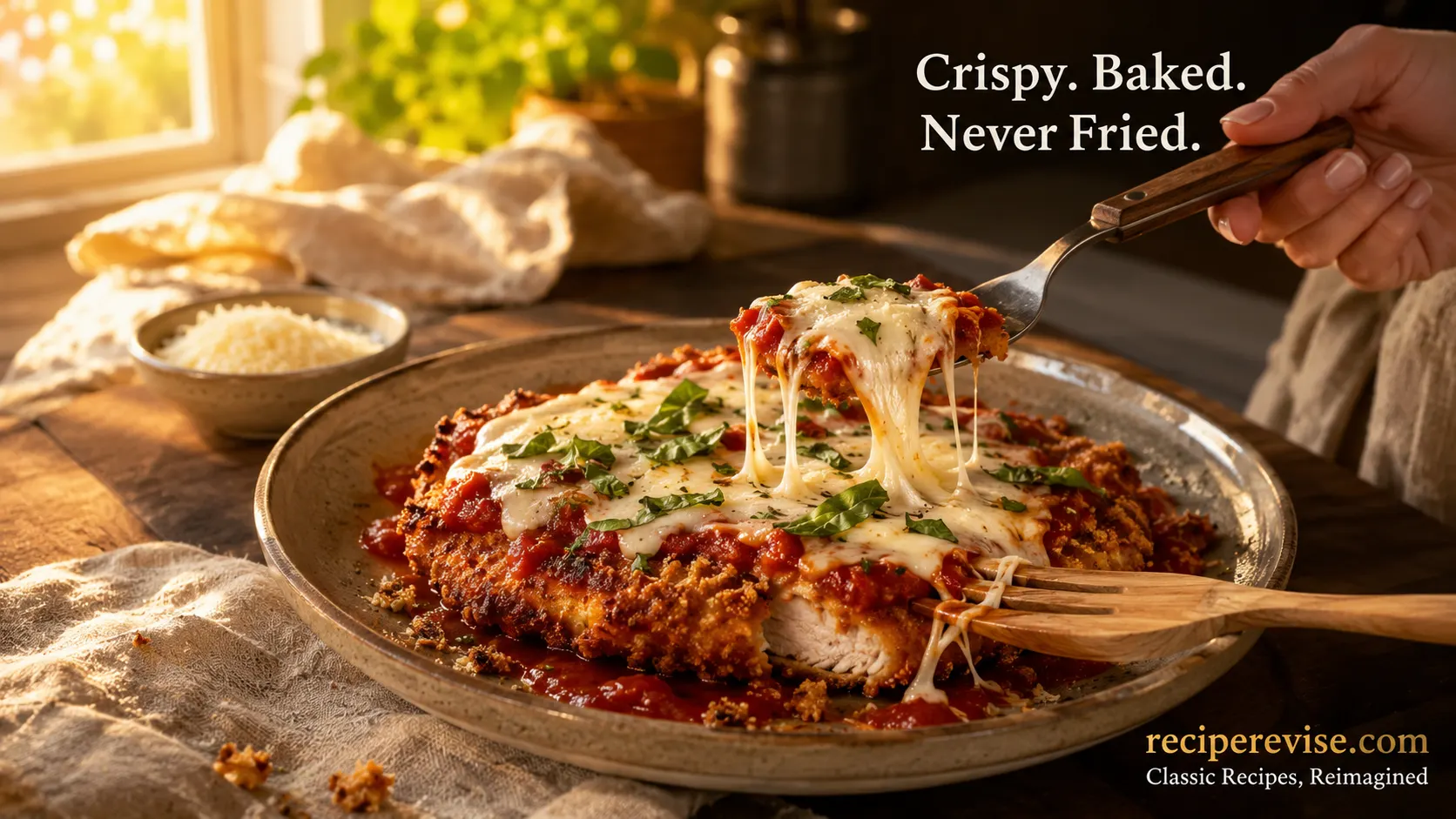
Baked chicken parmesan swaps frying for a crisp-on-a-rack technique, cutting fat without losing crunch — a reflux-friendly comfort food classic worth remaking tonight.
If you’ve been handed the standard reflux advice — no tomatoes, no citrus, no coffee, forever — you already know how well that works in real life. It doesn’t. The heavier lever is fat content and meal size, not any single “trigger” ingredient, and a 3-hour buffer before bed matters more than what’s actually on the plate. Technique fixes let most people keep the dishes they love.
I’ve spent a long time cooking around other people’s stomachs, and reflux is the one complaint where the standard advice and the actual evidence quietly disagree. That gap is what this piece is about.
Is It Really the Tomato Sauce, or Something Else Entirely?
No — for most people, it’s the fat and the volume of the meal, not the tomato itself. Research on dietary triggers for GERD has found little objective evidence that specific foods like citrus, chocolate, or spicy dishes reliably increase acid exposure. What does hold up: large, high-fat meals measurably worsen reflux.
Here’s the part nobody puts on the fridge magnet. A review of dietary factors in GERD management found that patients frequently blame chocolate, fried food, and spicy dishes for their symptoms, yet well-controlled studies show these specific items have little measurable effect on objective acid exposure. Citrus and carbonated drinks get avoided out of fear more than evidence, too.
What the same body of research does confirm, repeatedly, is that large meal volume and high calorie content drive up esophageal reflux burden. That’s a different problem than “don’t eat tomatoes.” It’s a portion and composition problem, and it’s one you can actually cook your way around.
I’m not telling you your grandmother’s marinara never bothered anyone. I’m telling you the amount of it, the fat riding alongside it, and what time you ate it probably mattered more than the tomatoes did.
What Actually Drives Reflux — Fat Load, Portion Size, or the Food Itself?
Fat load and portion size have the stronger evidence base. A study in Clinical Gastroenterology and Hepatology found large meals consistently produce more reflux than small ones, and high-fat, high-calorie meals extend the time acid sits in the esophagus by relaxing the lower esophageal sphincter (LES).
Roughly 20% of adults in the United States live with GERD, and the disease is driven substantially by that LES — the ring of muscle that’s supposed to keep stomach contents where they belong. Fat doesn’t just add calories; it relaxes that muscle directly, and a bigger meal takes longer to clear the stomach, which extends the window where reflux can happen.
Here’s how the evidence actually sorts out, so you know where to spend your effort:
| Factor | Strength of evidence | What it means for cooking |
|---|---|---|
| High fat content in a meal | Strong | Reformulate sauces, swap frying for baking, trim visible fat |
| Large meal volume | Strong | Serve smaller portions, more often |
| Eating within 3 hours of lying down | Strong | Move dinner earlier, skip late snacks |
| Specific “trigger” foods (citrus, spicy, chocolate) | Weak / inconsistent | Test individually before cutting them out |
Notice what’s not strong evidence. Citrus and spice sit at the bottom for a reason — plenty of people react to them, plenty don’t, and cutting them out reflexively means giving up flavor for a rule that may not even apply to your body.
The Three-Hour Rule Nobody Actually Follows
The NIDDK’s own guidance on eating and GERD is blunt about this: eating at least three hours before lying down can improve symptoms at night. It’s simple. It’s also the piece almost everyone skips.
Gravity does real work for you while you’re upright. Lie down with a full stomach and that help disappears — the meal sits there, digestion slows, and the pressure has nowhere to go but up. A 9 p.m. bowl of pasta is a different meal, physiologically, than the same bowl eaten at 6.
The dish rarely needs to disappear from your life. The clock it shows up on usually does.
That’s not a small ask for people with late work schedules or kids who eat dinner at 8. But shifting your heaviest, richest meal earlier — even by ninety minutes — does more for nighttime symptoms than any ingredient swap on this page.
Two Reflux-Trigger Classics, Rebuilt
Frying and heavy cream both hit the two levers that actually matter: fat load and calorie density. Baking and thinner, protein-based sauce bases cut both without gutting the dish. A 2024 review on deep-fat frying confirms that oil penetrates food through pores created as moisture escapes during cooking — which is exactly the mechanism baking sidesteps.
Baked “Fried” Chicken Parmesan
This keeps the crunch and the cheese pull. It loses the oil bath.
Yield: 4 servings
Prep time: 20 minutes
Cook time: 25 minutes
Ingredients
- 4 boneless, skinless chicken breasts, pounded to even thickness
- 1 cup panko breadcrumbs
- ⅓ cup finely grated Parmesan
- 1 tsp dried oregano
- 2 large eggs, beaten
- ¼ cup all-purpose flour
- Olive oil spray
- 1 cup marinara (low-oil, recipe below or store-bought)
- 4 oz part-skim mozzarella, sliced thin
- Fresh basil, torn
Instructions
- Preheat oven to 425°F. Set a wire rack over a baking sheet.
- Dredge each chicken breast in flour, then egg, then a panko-Parmesan-oregano mix, pressing gently so it sticks.
- Place on the rack and spray both sides lightly with olive oil.
- Bake 18–20 minutes, until golden and cooked through (165°F internal).
- Top each piece with marinara and mozzarella. Return to the oven 3–4 minutes, just until the cheese melts.
- Rest 5 minutes, scatter with basil, and serve half-portions with a side salad rather than a full pasta plate alongside it.
Why it works: baking on a rack lets fat drip away instead of pooling under the breading, and the coating still crisps because hot, dry air does the work oil would have done. Pairing it with a salad instead of a second starch keeps the total meal volume down — which, per the evidence above, matters more than the breading itself.
Lighter Tomato-Cream Pasta (No Heavy Cream Required)
A blended cannellini base gets you the same silky texture without the cream’s fat load.
Yield: 4 servings
Prep time: 10 minutes
Cook time: 20 minutes
Ingredients
- 8 oz whole wheat or chickpea pasta
- 1 tbsp olive oil
- 1 small onion, diced
- 2 garlic cloves, minced
- 1 can (15 oz) crushed tomatoes
- 1 can (15 oz) cannellini beans, drained and rinsed
- ½ cup low-sodium vegetable broth
- 1 tsp dried basil
- Salt to taste
- Fresh parsley, chopped
Instructions
- Cook pasta according to package directions. Reserve ½ cup pasta water.
- In a large skillet, sauté onion in olive oil over medium heat until soft, about 5 minutes. Add garlic, cook 1 minute.
- Blend the cannellini beans with the broth until smooth.
- Add crushed tomatoes and the bean purée to the skillet. Simmer 8–10 minutes, stirring occasionally.
- Toss in cooked pasta, adding reserved pasta water as needed to loosen the sauce.
- Season, top with parsley, and serve in modest bowls — not the mounded, restaurant-style portion.
Why it works: the bean purée mimics cream’s body and richness through starch and fiber rather than saturated fat, so you get the mouthfeel without asking your LES to relax around a fat bomb. This kind of swap — building richness from fiber instead of fat — is the same logic behind the recipes in our heart-healthy 7-day meal plan built around cholesterol, and it holds up just as well here.
How Do You Actually Modify a Recipe Without Ruining It?
Start with the fat and the portion, leave the flavor alone. Swap frying for baking or air-frying, thin cream sauces with broth or blended beans, trim visible fat before cooking, and cut portions by a quarter rather than eliminating the dish. Flavor compounds mostly survive; it’s the fat load that was doing the damage.
A few swaps earn their place in almost every reflux-heavy recipe:
- Frying → baking or air-frying. Same crunch, a fraction of the oil.
- Heavy cream → evaporated low-fat milk or blended white beans. Keeps the texture, drops the saturated fat.
- Whole fat cheese → part-skim, used with intention. Half the amount, grated fine, goes further than you’d think.
- One big plate → two smaller ones, hours apart. This is the single highest-leverage change on this whole list.
- Late dinner → early dinner. Not a recipe change at all, and still one of the most effective ones.
That last point connects to something I keep coming back to with readers who write in about long-term diet changes generally — the approach we take with epigenetic-longevity eating and sirtfoods leans the same direction: modify the mechanism, not the menu. Reflux management works the same way.
Quick reference: what to change first
When symptoms flare, work down this list in order rather than eliminating everything at once — portion size, then fat content, then meal timing, then (only if those don’t resolve it) specific ingredients.
FAQ: Your Actual Questions About Reflux and Food
Do I have to give up tomatoes and citrus permanently?
Not necessarily. The evidence for tomatoes and citrus as universal reflux triggers is weak and inconsistent across studies. Try reducing portion size and pairing them with a lower-fat meal before cutting them out completely — many people tolerate them fine once fat and volume are addressed.
Is decaf coffee actually safer for reflux than regular?
Caffeine is one of the more consistently reported triggers, though individual tolerance varies widely. If coffee bothers you, decaf is a reasonable first test before giving it up entirely — but pay attention to whether it’s the coffee or what you’re eating alongside it.
Does spicy food really cause heartburn?
Research hasn’t found strong objective evidence linking spice specifically to increased acid exposure, even though it’s one of the most commonly self-reported triggers. Some people are genuinely sensitive to capsaicin’s effect on the esophageal lining; many aren’t, and the discomfort they feel traces back to portion size instead.
How long before bed should I really stop eating?
Three hours is the figure supported by NIDDK guidance and multiple clinical reviews. Less than that and gravity stops helping you the way it does when you’re upright.
What if I’ve already cut portions, fat, and timing, and I’m still symptomatic?
That’s worth a conversation with a doctor rather than another round of dietary tinkering — persistent symptoms despite solid lifestyle changes can point toward something that needs medical management, not just a better recipe.
I built both of these recipes to survive a real weeknight, not just a photo. Fry a chicken cutlet on a Tuesday if you want to — just maybe not at 9 p.m. with a side of trying to fall asleep by 10.