
The complete MASLD diet explained: what to eat, what to avoid, a 7-day Mediterranean meal plan, and two liver-friendly recipes worth making tonight.
What to Actually Eat for Fatty Liver
If you eat mostly plants, swap refined carbs for whole ones, cut back hard on added sugar and alcohol, and lose 5–10% of your body weight if you carry extra, you can measurably improve — and sometimes reverse — MASLD. No single “superfood” does the job. What works is a sustained pattern, and the Mediterranean way of eating is currently the closest thing to a proven template.
I’ve rewritten a lot of “healthy” versions of comfort food for this site, but this one didn’t start in my kitchen — it started in a lab report. A reader’s bloodwork came back with three unfamiliar letters, MASLD, and a doctor who said “diet” and moved on to the next patient. So let’s actually do the diet part properly.
What Is MASLD, and Why Isn’t It Called Fatty Liver Anymore?
MASLD stands for metabolic dysfunction-associated steatotic liver disease — the new name, adopted in June 2023, for what used to be called NAFLD (non-alcoholic fatty liver disease). It describes fat buildup in the liver linked to metabolic issues like insulin resistance, high blood pressure, or high triglycerides. It’s the same condition your doctor may still call “fatty liver.”
Here’s the part almost nobody explains well: the rename wasn’t cosmetic. More than 200 physicians, researchers, and patient advocates across the American, European, and Latin American liver associations voted to retire “non-alcoholic fatty liver disease” because defining a condition by what it isn’t (alcohol-related) told you nothing about what actually caused it, and “fatty” carried stigma many patients found demoralizing. MASLD instead names the real driver: metabolic dysfunction. The change covered the whole family of related conditions — NASH became MASH, and a new category called MetALD was created for people who have MASLD alongside heavier alcohol use.
If you’re Googling “NAFLD vs MASLD” because your chart says one thing and your doctor said another — relax. For more than 95% of patients, they’re describing the exact same disease with a slightly refined diagnostic definition. Nothing about your treatment plan changes because of the new name.
MASLD, MASH, and NAFLD: The Quick Cheat Sheet
| Term | What it means | Still hear it? |
|---|---|---|
| NAFLD | Legacy name for fat buildup in the liver not caused by alcohol | Yes, especially in older records and older articles |
| MASLD | Current name — fat buildup in the liver plus at least one metabolic risk factor (obesity, prediabetes, high blood pressure, etc.) | Yes — this is the term going forward |
| MASH | Current name for the more advanced, inflamed form of MASLD (formerly NASH) | Yes, when there’s active liver inflammation |
| MetALD | MASLD plus a moderate-to-higher alcohol intake | Less common, but increasingly used |
Table: how the 2023 nomenclature update maps onto the terms you might see on a lab report or an older website.
Can You Actually Reverse Fatty Liver With Diet Alone?
In early-stage MASLD without significant scarring, yes — diet and weight loss are the primary treatment, and there’s no FDA-approved medication specifically for early, uncomplicated steatosis. Once fibrosis (scarring) develops, diet still helps significantly, but the goal shifts from “reversal” to “slowing progression and reducing inflammation,” ideally alongside your care team.
This is where I’ll push back on the internet a little. A lot of pages promise “reverse it in six weeks,” and while liver enzymes can genuinely improve fast, structural improvement takes longer and depends on how far things had progressed. What the actual weight-loss research shows is more specific than most sites let on:
- 5% body weight loss — reduces liver fat content, based on biopsy-confirmed research
- 7% body weight loss — improves liver inflammation
- 10%+ body weight loss — improves liver fibrosis (scarring), and weight loss beyond 10% has been linked to steatohepatitis resolving in up to 90% of patients in supporting research
Even a small, sustainable loss counts. It’s just that “significant” scarring improvement asks more of you than “my jeans fit better” does.
What to Eat on a MASLD Diet
Build meals around fiber-rich plants, unsaturated fats, and lean or plant-based protein — that combination is the backbone of the Mediterranean pattern, which is currently the diet with the strongest liver-specific evidence behind it. There’s no single miracle ingredient; the research keeps pointing at the whole pattern, not one food.
Fiber sources that actually move the needle: oats, barley, lentils, chickpeas, black beans, artichokes, and cruciferous vegetables like broccoli and Brussels sprouts. Fiber slows glucose absorption, which matters because your liver is the organ doing the metabolic cleanup when blood sugar spikes.
Unsaturated fats to lean on: extra-virgin olive oil, walnuts, almonds, avocado, and fatty fish like salmon, sardines, and mackerel. A diet high in monounsaturated fat has been shown to lower liver fat and improve both hepatic and total insulin sensitivity in clinical research — which is a fancier way of saying your liver and your blood sugar both respond to the type of fat, not just the amount.
Protein, and why it matters more than most fatty-liver guides admit: adequate protein supports liver cell repair and helps preserve muscle mass during the weight loss that most effectively reduces liver fat. If you’re losing weight to help your liver, losing muscle along with it works against you — this is the actual answer to “is high protein good for fatty liver,” and it’s more physiological than trendy.
What to Avoid With Fatty Liver — and What to Swap It For
Added sugar and refined carbohydrates are the two biggest dietary drivers of liver fat, with fructose specifically metabolized almost entirely in the liver itself. Alcohol, fried food, and processed or red meat round out the list. None of these require perfection — consistent reduction beats occasional purity.
| Food to limit | Why it’s a problem | Better swap |
|---|---|---|
| Sugary drinks, soda, sweetened coffee | Excess sugar, especially added sugars, significantly contributes to the development and progression of fatty liver disease | Sparkling water with citrus, black or lightly milked coffee |
| White bread, white rice, white pasta | Refining strips out the fiber, which lets these grains raise blood sugar faster as the body breaks them down | Whole wheat, brown rice, farro, or legume-based pasta |
| Fried foods | High in saturated fat, which has been linked to increased damage to liver cells | Air-fried, roasted, or pan-seared with olive oil |
| Processed and red meat | Higher in saturated fat and sodium, both liver-unfriendly in excess | Fatty fish, legumes, skinless poultry |
| Alcohol | Compounds liver fat accumulation independent of metabolic risk | Herbal tea, kombucha, or the sparkling water above |
Table: this isn’t a “never again” list — it’s a “make these the exception, not the default” list.
Is Coffee Actually Good for Fatty Liver?
Yes, with a caveat: it’s the coffee, not the coffee drink. Regular coffee consumption is associated with lower levels of ALT and GGT, the liver enzymes used to flag injury, and moderate intake — roughly one to two cups daily — has been linked to lower all-cause mortality in people with MASLD specifically. A large biobank cohort study found something more specific: drinking two or more cups a day was tied to a meaningfully lower risk of advanced liver fibrosis, though coffee didn’t appear to change whether someone developed MASLD in the first place.
The catch, and it’s the one Mayo Clinic is blunt about: the sugar and fat in a mocha or a sweetened latte cancel out whatever protective effect the coffee itself offers. Black coffee, or coffee with a splash of milk, is the version the research is actually talking about.
Is the Mediterranean Diet Really the Best Option?
It’s currently the pattern with the most direct evidence, though “best” comes with some real-world nuance. A meta-analysis of 26 studies found Mediterranean-style interventions reduced ALT, AST, the Fatty Liver Index, and liver stiffness — all measurable markers of disease severity, and a separate trial found a 38% reduction in liver steatosis after just six weeks, independent of weight loss or waist circumference changes.
Here’s the nuance worth sitting with: the same researchers behind one of the largest Mediterranean-diet trials for fatty liver, MEDINA, reported something most articles skip entirely — delivering the diet to free-living adults in the real world was genuinely difficult, and adherence, not the science, was the harder problem. That’s exactly why this guide leans on real recipes instead of a list of “eat this” foods. A diet that tastes like punishment doesn’t survive contact with a Tuesday night.
The practical version of “Mediterranean” for a liver-focused plate: half vegetables and fruit, a quarter whole grains or legumes, a quarter fish or lean protein, olive oil as your primary fat, and wine mostly absent — not because one glass ruins everything, but because alcohol and liver repair don’t mix well while you’re actively trying to improve MASLD.
The 7-Day MASLD Meal Plan
Built around the eat/avoid framework above — swap any dinner for another day’s if it suits your week better; the pattern matters more than the exact sequence.
| Day | Breakfast | Lunch | Dinner | Snack |
|---|---|---|---|---|
| Mon | Overnight oats, walnuts, berries | Lentil & roasted veg bowl, olive oil dressing | Walnut-Crusted Salmon with Lemony White Beans (recipe below) | Apple + almond butter |
| Tue | Greek yogurt, chia, sliced pear | Leftover salmon over greens | Turkey & black bean chili, side salad | Carrot sticks + hummus |
| Wed | Veggie & egg scramble, whole grain toast | Chickpea salad, tahini-lemon dressing | Cumin-Roasted Cauliflower and Chickpea Bowl (recipe below) | Handful of almonds |
| Thu | Oatmeal, cinnamon, ground flax | Leftover chickpea bowl | Baked cod, farro, sautéed spinach | Orange + pistachios |
| Fri | Smoothie: spinach, banana, oat milk, flax | Whole grain wrap, roasted veg, hummus | Grilled chicken thighs (skin off), quinoa, roasted broccoli | Greek yogurt + berries |
| Sat | Whole grain avocado toast, chili flakes | Sardine & white bean salad | Homemade turkey meatballs, whole wheat pasta, tomato-basil sauce | Cucumber + tzatziki |
| Sun | Veggie frittata, side of berries | Leftover meatballs | Roast salmon, lemony farro, roasted Brussels sprouts | Small handful mixed nuts |
Weekly grocery list, by section: olive oil, canned white beans, canned chickpeas, black beans, lentils, oats, farro, quinoa, whole wheat pasta, whole grain bread; salmon, cod, sardines, chicken thighs, ground turkey; spinach, broccoli, Brussels sprouts, cauliflower, mixed greens, cucumber, carrots, tomatoes; berries, apples, oranges, pears, bananas, avocado, lemons; walnuts, almonds, pistachios, chia, flax, tahini; Greek yogurt, plain kefir or milk; garlic, cumin, chili flakes, fresh herbs.
Prep-ahead schedule: cook a big batch of farro and lentils Sunday night, hard-boil eggs for grab-and-go breakfasts, and roast a full sheet pan of vegetables to split across two or three dinners. Twenty minutes of Sunday prep buys you three weeknights of not deciding anything.
Two Recipes Worth Actually Cooking
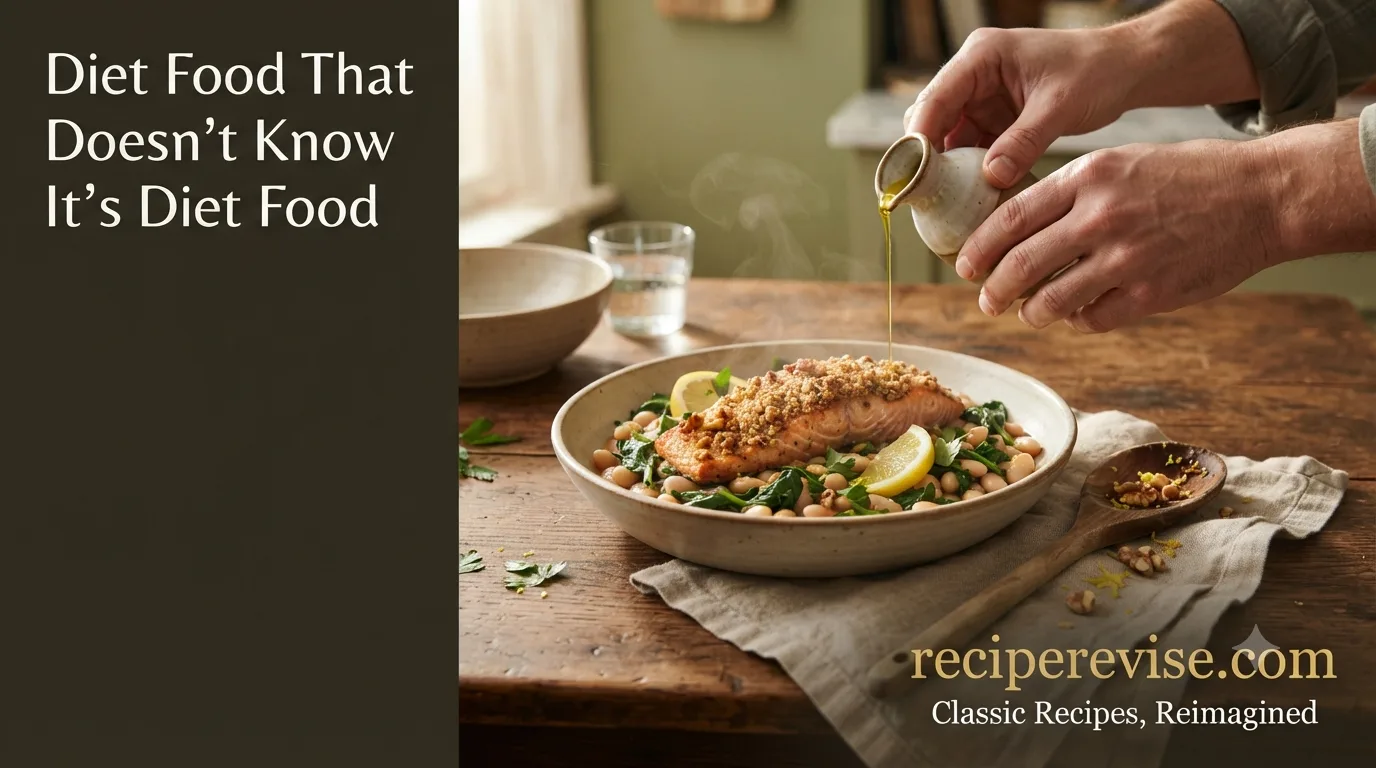
Walnut-Crusted Salmon with Lemony White Beans
Serves 4 | Prep: 10 min | Cook: 15 min
Ingredients:
- 4 salmon fillets (about 5 oz each)
- ½ cup walnuts, finely chopped
- 1 tbsp Dijon mustard
- 2 tbsp extra-virgin olive oil, divided
- 2 (15 oz) cans white beans, drained and rinsed
- 1 lemon, zested and juiced
- 2 cloves garlic, minced
- 2 cups baby spinach
- Salt and black pepper to taste
Instructions:
- Preheat oven to 400°F (200°C). Pat salmon dry, season with salt and pepper.
- Brush each fillet with mustard, then press chopped walnuts on top.
- Bake 12–15 minutes until the salmon flakes easily.
- Meanwhile, warm 1 tbsp olive oil in a skillet over medium heat. Add garlic, cook 30 seconds, then add white beans, lemon zest, and lemon juice. Simmer 5 minutes, stirring in spinach at the end until just wilted.
- Serve salmon over the beans, finished with the remaining olive oil.
Approximate nutrition per serving: ~410 calories, 32g protein, 20g fat (mostly unsaturated), 8g fiber — estimated from standard USDA ingredient values, not a substitute for a dietitian’s calculation if you’re tracking closely.
Cumin-Roasted Cauliflower and Chickpea Bowl
Serves 4 | Prep: 10 min | Cook: 25 min
Ingredients:
- 1 large head cauliflower, cut into florets
- 1 (15 oz) can chickpeas, drained, rinsed, and patted dry
- 2 tbsp extra-virgin olive oil
- 1½ tsp ground cumin
- ½ tsp smoked paprika
- 3 tbsp tahini
- Juice of 1 lemon
- 2–3 tbsp water (to thin)
- 2 cups cooked farro or brown rice
- Fresh parsley, chopped
Instructions:
- Preheat oven to 425°F (220°C). Toss cauliflower and chickpeas with olive oil, cumin, and paprika on a sheet pan.
- Roast 25 minutes, stirring halfway, until cauliflower is browned at the edges.
- Whisk tahini, lemon juice, and water into a pourable dressing.
- Build bowls: farro or rice, roasted cauliflower and chickpeas, a generous drizzle of tahini dressing, parsley on top.
Approximate nutrition per serving: ~380 calories, 13g protein, 17g fat (mostly unsaturated), 11g fiber — again, an estimate, not a lab-verified figure.
(If you’re also managing blood pressure alongside MASLD, this pairs naturally with our 7-day high-protein, low-sodium meal plan for GLP-1 and high blood pressure.)
Expert Tips Worth Keeping on the Fridge
- Cook with olive oil as your default fat — it’s doing more for your liver than butter ever will.
- Read labels for “corn syrup” and “fructose,” not just “sugar” — they hide in sauces, cereal, and bread.
- Prioritize fiber at breakfast; it blunts the blood sugar spike for the rest of the day.
- Black coffee, one to two cups, is one of the few “add this” recommendations with real backing behind it.
- Protein at every meal isn’t about muscle vanity here — it’s about not losing muscle while you lose liver fat.
Frequently Asked Questions
What is MASLD and how is it different from NAFLD?
MASLD is the current medical name for what was called NAFLD — fat buildup in the liver linked to metabolic risk factors like obesity, prediabetes, or high blood pressure. For the vast majority of patients, it’s the same underlying condition with a more precise, less stigmatizing name, adopted by international liver societies in 2023.
What foods should I eat on a fatty liver diet?
Center meals on fiber-rich plants (legumes, whole grains, cruciferous vegetables), unsaturated fats (olive oil, nuts, fatty fish), and lean or plant-based protein. This is essentially the Mediterranean pattern, which currently has the strongest liver-specific research behind it.
What foods should I avoid with fatty liver disease?
Limit added sugar and sugary drinks, refined grains like white bread and pasta, fried food, processed and red meat, and alcohol. None require total elimination — consistent reduction is what the research actually supports.
Can fatty liver be reversed by diet alone?
In early-stage MASLD without significant scarring, yes — diet and weight loss are the frontline treatment. Once fibrosis develops, diet still meaningfully helps slow and sometimes improve it, typically alongside medical monitoring rather than replacing it.
Is the Mediterranean diet the best diet for fatty liver?
It currently has the most direct clinical evidence of any dietary pattern for reducing liver fat and improving liver enzymes. Its biggest real-world weakness isn’t the science — it’s sustainability, which is why flavor and realistic recipes matter as much as the food list itself.
How much weight loss is needed to improve fatty liver?
Around 5% body weight loss reduces liver fat, 7% improves inflammation, and 10% or more is linked to measurable improvement in scarring. Even modest, sustained loss produces real benefit — it doesn’t have to be dramatic to matter.
Is coffee good or bad for fatty liver?
Black or lightly milked coffee, at roughly one to two cups a day, is associated with lower liver enzymes and reduced risk of advanced fibrosis in people with MASLD. Sweetened coffee drinks appear to cancel out the benefit, since added sugar and fat work against the same liver you’re trying to help.
How much fiber do I need per day for liver health? General adult fiber guidelines of 25–35 grams daily apply here too, prioritizing legumes, whole grains, and vegetables over supplements. Getting there through food rather than powders also brings the unsaturated fats and plant protein that do additional work for liver health.
For the terminology and weight-loss benchmarks in this guide, Mayo Clinic’s fatty liver disease diet page and their self-care guidance on MASLD are both worth bookmarking, as is the American Liver Foundation’s diet guidance if you want a non-profit’s plain-language take. If your household is also navigating a GLP-1 prescription alongside a MASLD diagnosis, our GLP-1-friendly comfort food guide is built to sit right alongside this one.
This article is educational and reflects current published research as of July 2026 — it isn’t a substitute for care from your doctor or a registered dietitian, especially if you already have diagnosed fibrosis or MASH.
Diet advice for a liver condition can feel like homework, but this one has a nice quirk: the “boring” food — beans, olive oil, oily fish — is also just genuinely good cooking, so at some point it stops feeling like a prescription and starts feeling like dinner.
— Pepper Sage